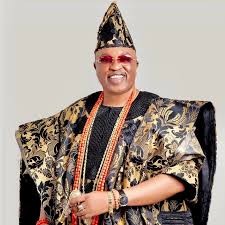
An Islamic human rights group, Tawunu Human Rights Initiative, has instituted a suit against the Osun State Government at the Federal High Court in Osogbo over a warning letter issued to the Oluwo of Iwo, Oba Abdulrasheed Adewale Akanbi, concerning his public comments on traditional religious practices.
The group is seeking judicial intervention, arguing that the state government’s action amounts to an alleged interference with the monarch’s constitutionally guaranteed rights to freedom of thought, conscience, religion and expression.
The suit, marked FHC/OS/CS/205/2026, was filed on November 6, 2026, through the group’s counsel, Prof. Abdul Rasheed Musa Yusuf.
The Commissioner for Local Government and Chieftaincy Affairs, the Osun State Attorney-General and the Oluwo were listed as respondents.
In its application, the organisation is asking the court to declare that the monarch’s rights to freedom of religion, conscience and expression are protected under Sections 38 and 39 of the 1999 Constitution, as amended.
It argued that the government lacked the inherent authority to censor the Oluwo’s personal religious, philosophical and cultural opinions merely because they were considered controversial or inconsistent with prevailing traditional practices.
The applicant also wants the court to restrain the commissioner and the attorney-general from intimidating, threatening, sanctioning or interfering with the monarch’s constitutionally protected rights.
It further seeks an order compelling the government to withdraw any administrative directive restricting his opinions without lawful justification.
The group is also asking the court to prevent the state government from imposing punitive measures, withdrawing the monarch’s recognition or depriving him of privileges over his religious and philosophical views.
The suit comes days after the Osun State Government cautioned the Oluwo over alleged inflammatory remarks it said could trigger religious and inter-town conflicts.
In a letter dated November 2026, with reference number CD.17/1/VOL.VIII/377, the Ministry of Local Government and Chieftaincy Affairs accused the monarch of making public statements capable of raising communal tensions and undermining peaceful coexistence.
The government warned the traditional ruler, saying, “You cannot, and you must not, conduct yourself in any way that can foment religious crisis through serial attacks on people of other faiths.”
It also directed him to desist from further attacks on people of other religions and fellow traditional rulers, while urging him to preserve the culture and traditions of his domain.
The ministry said it would monitor the monarch’s compliance with the directives, while the Osun State Council of Obas was also instructed to watch developments in Iwoland.
The controversy is linked to the Oluwo’s longstanding criticism of Yoruba traditional religious practices and the retention of deities in the palaces of traditional rulers.
In July 2026, the monarch reportedly argued that Yoruba palaces without idols were greater than churches, mosques and shrines, urging traditional rulers to remove deities from their palaces and relocate them to shrines or museums.
He has also criticised traditional rites associated with the installation of monarchs, describing some of the practices as pathways to idolatry.
The dispute is not the first between the Oluwo and traditional religious adherents.
In August 2023, Governor Ademola Adeleke intervened in a disagreement between the monarch and traditional worshippers during the Isese festival, calling for peaceful coexistence among religious groups in the state.
The state government had then warned against religious confrontation, insisting that adherents of different faiths were free to practise their religions peacefully within the bounds of the law.
The latest suit is anchored on provisions of the Nigerian Constitution, the African Charter on Human and Peoples’ Rights and the Fundamental Rights (Enforcement Procedure) Rules, 2009.
The court has yet to determine the claims or grant any of the reliefs sought by the applicant. No hearing date was indicated in the originating motion.