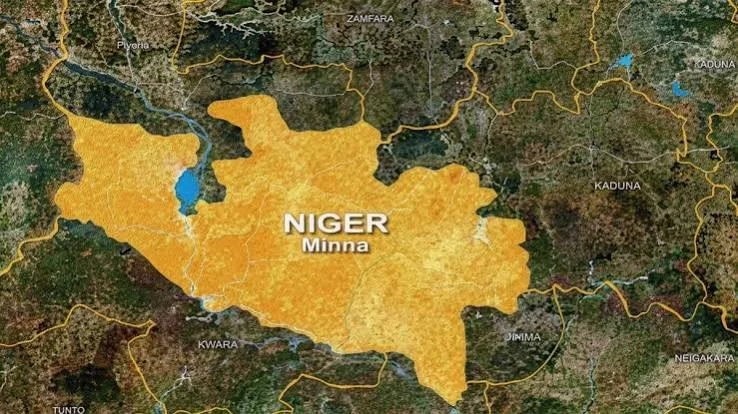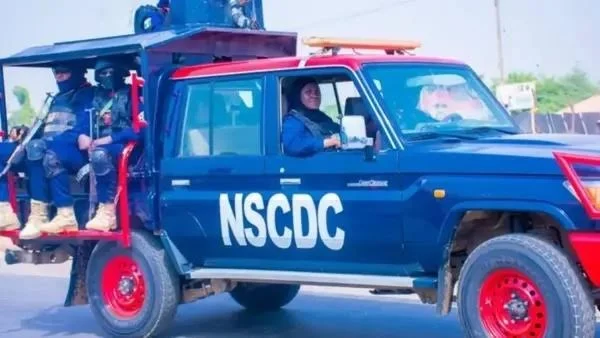
Families of 37 suspected illegal miners who died after being arrested by the Nigeria Security and Civil Defence Corps in Niger State have called for justice, accountability and compensation.
The relatives, who spoke with Saturday PUNCH, alleged that they were denied access to the detainees after their arrest and only learnt of their deaths later.
Some of the bereaved families said repeated attempts to visit the suspects or deliver food to them at the NSCDC facility were unsuccessful, as they were allegedly asked to return on different occasions.
The allegations have heightened concerns over the circumstances surrounding the deaths, including the conditions in which the detainees were held and whether they received adequate medical attention.
The Federal Government has since constituted an investigative panel, which began sitting on Wednesday to establish what happened to the detainees.
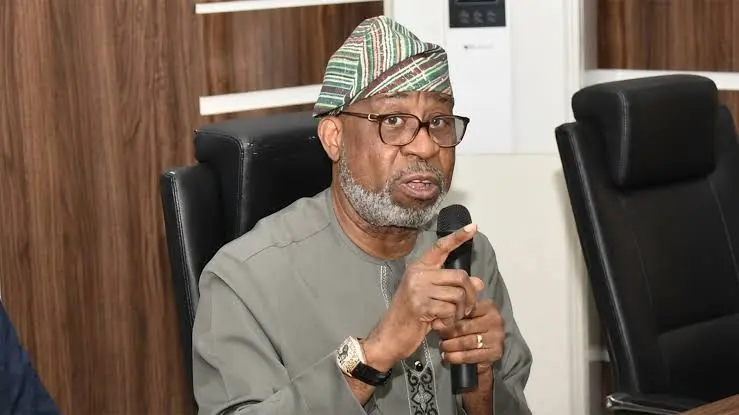
The committee, inaugurated by the Minister of Interior, Olubunmi Tunji-Ojo, is chaired by retired Deputy Director-General of the Department of State Services, Jonathan Kure, while Professor Isa Hayatu Chiroma, SAN, serves as secretary.
A 63-year-old father, Musa Aliyu, said he lost two sons, Ibrahim, 17, and Abubakar, 12, in the incident.
Aliyu, who said he had been bedridden for more than a year, explained that his sons contributed to his upkeep through proceeds from artisanal mining.
He said, “My children left home for the mining site as usual to make some money. They have been the ones buying medicine for me since my sickness started. They did not return.
“My wife went to look for them, but we were told they had been arrested by NSCDC. When we went there, we could not see them. Later, we were told they were dead.
“We identified their bodies at the General Hospital. We do not have the power to fight the authorities. We leave them to God.”
Aliyu further alleged that the bodies remained at the hospital for several hours before they were released to the families.
Another bereaved father, Lawal Muhammed, said he lost his 15-year-old son, Suleiman, after officers allegedly prevented relatives from seeing the detainees.
Muhammed said he learnt of his son’s arrest from his wife and went to the NSCDC office with his brother and other parents.
He said, “When I came back on Wednesday, my wife told me that my son was arrested at the mining site by NSCDC officers. My brother, some parents of the children arrested and I went to the NSCDC office that night, but they asked us to come back on Thursday.”
According to him, the relatives returned the next day with food for the detainees but were instead informed that his son had died.
“I was at the NSCDC office when the bodies were being loaded into the ambulance, and I followed them to the General Hospital. They did not bring the bodies down from the ambulance until 6 pm,” he alleged.
Muhammed called for the prosecution of any official found responsible for wrongdoing.
“Where is the justice we have been demanding for? I want the government to prosecute the officers involved in this matter so that others will learn from this. They are officers who took an oath to protect people,” he said.
Muhammad Musa, who said his 17-year-old nephew, Abubakar, was among those who died, also alleged that relatives were kept outside the NSCDC premises when they sought information.
“They asked us to wait outside. After some time, they told us to go to the General Hospital. When we got there, I saw my nephew among the dead. It was painful,” he said.
Musa urged the government to compensate the affected families.
“We cannot bring back the dead, but those behind this incident should pay for what they did. Compensation should be paid to the families,” he said.
Another bereaved father, Mohammad Nuru, said his son, Sabiu, as well as nine other relatives and neighbours, died in the incident.
Nuru alleged that he was also prevented from seeing the detainees when he went to the NSCDC office with food after their arrest.
He said many of those arrested were teenagers who had taken up artisanal mining to help their families survive.
“These are just children, many of them 14 and 15, who are trying to earn money instead of going into crime. The economy is bad already, and they want to support their families,” Nuru said.
Meanwhile, Mohammed Mankudi said he first learnt about the deaths through reports circulating on Facebook.
He said relatives went to the NSCDC office to verify the information but were directed to the General Hospital.
“When the information started circulating on Facebook, we rushed to the NSCDC office to confirm the information, but they had already taken them to the General Hospital,” he said.
Mankudi also alleged that some of the bodies he saw at the hospital had foam and blood around their mouths.
However, the allegations by the relatives concerning the possible causes of death have not been independently verified. Establishing the causes and circumstances of the deaths is among the issues before the Federal Government’s investigative committee.
The investigative committee commenced its work on Wednesday and adopted a plan for the inquiry, according to a statement issued by its secretary, Chiroma.
The panel is expected to visit relevant locations, engage government agencies, interview survivors and other persons connected to the incident, and examine documents and other evidence.
Its medical team has also begun work aimed at determining the causes, mechanisms and manner of the deaths.
The committee has invited individuals and organisations with relevant information to submit memoranda to assist the investigation.
Its mandate includes establishing the identities of those who died, examining the circumstances of their arrest and detention, determining how and why the deaths occurred, identifying any responsibility or negligence and recommending appropriate measures, including compensation where necessary.
The incident has also drawn calls for the investigation to address broader issues surrounding poverty and hazardous artisanal mining.
A Peoples Redemption Party chieftain, Yakubu Kingsley, urged the committee to conduct a transparent and impartial investigation, saying the public deserved clarity on what happened to the detainees.
He said, “Whatever the circumstances that led to their detention, they remained human beings whose lives deserved protection, dignity and humane treatment.
Kingsley also urged the panel to examine the socioeconomic conditions that push young Nigerians into artisanal mining, particularly poverty, unemployment and limited livelihood opportunities.
“Enforcement alone cannot address a problem whose roots also lie in poverty, unemployment and the absence of viable alternatives,” he said.
He expressed concern over reports that some of those who died were teenagers.
“If children are leaving classrooms and entering dangerous mining sites because their families can no longer survive without their contribution, then the problem is much bigger than illegal mining,” Kingsley added.
Similarly, the Executive Director of the Centre for Community Empowerment and Poverty Eradication, Ambassador Abdurrahman Ayuba, called for a comprehensive investigation.
Ayuba said, “The panel should establish the number of people arrested and detained, the conditions in which they were held, the medical attention available to them and the sequence of events leading to the deaths.”
He further recommended the involvement of forensic pathologists, the National Human Rights Commission and credible civil society organisations in the inquiry.
He also called for the prosecution of any officials found culpable after the investigation.