Ugandan President, Yoweri Museveni, has officially been sworn in for a seventh consecutive term, further extending his nearly four-decade leadership of the East African nation after emerging victorious in the country’s disputed January presidential election.
The 81-year-old leader took the oath of office on Tuesday at the Kololo Independence Grounds in Kampala, Uganda’s capital, amid heightened security and the deployment of armoured vehicles across parts of the city.
According to Uganda’s electoral authorities, Museveni secured over 70 per cent of the votes cast in the January poll, paving the way for a fresh term expected to last until 2031.
Speaking during the inauguration, Museveni reaffirmed his commitment to national development and stability.
“We shall continue to work for the peace, prosperity and transformation of Uganda,” he said.
However, the outcome of the election has continued to attract criticism from opposition figures, particularly Museveni’s main rival, Bobi Wine, who rejected the results and alleged widespread electoral irregularities.
Wine, whose real name is Robert Kyagulanyi Ssentamu, described the election outcome as manipulated and accused the government of suppressing democratic processes.
“These results are fake,” Wine said, insisting that the electoral process was compromised.
The opposition politician later left Uganda, claiming concerns for his safety.
“The regime wanted to eliminate me,” he reportedly said after fleeing the country.
Despite the allegations, Uganda’s electoral officials maintained that the polls were conducted transparently and fairly, dismissing claims of fraud.
Museveni, who first came to power in 1986 after leading a rebel movement, remains one of Africa’s longest-serving leaders, alongside figures such as Denis Sassou Nguesso, Teodoro Obiang Nguema Mbasogo and Paul Biya, all of whom have held office for decades.
Several African leaders attended the inauguration ceremony, including Samia Suluhu Hassan, Félix Tshisekedi, Salva Kiir Mayardit and Hassan Sheikh Mohamud.
Uganda, which has one of the world’s youngest populations, has seen generations grow up under Museveni’s leadership, with many citizens having known no other president.
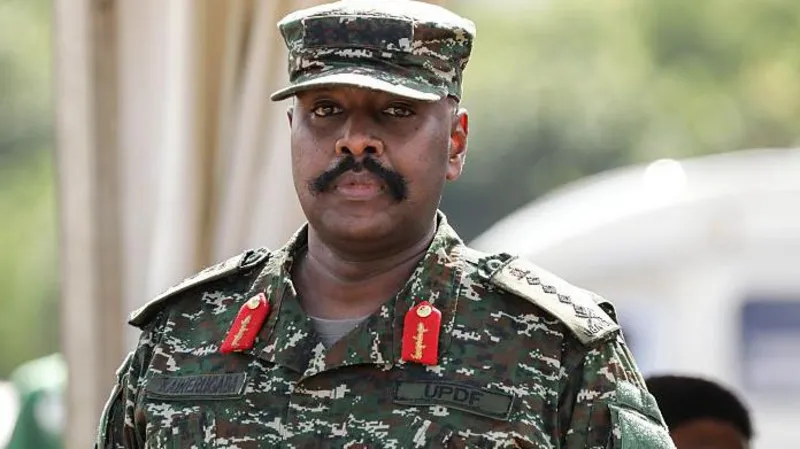
Although Museveni has not publicly announced retirement plans, political observers have speculated that the new tenure may be his final one. Attention has increasingly shifted to his son, Muhoozi Kainerugaba, who is widely viewed as a possible successor.
Meanwhile, human rights organisations have continued to express concerns over Uganda’s political climate and treatment of opposition members following the election.
Amnesty International recently alleged that at least 16 people were killed by security operatives during post-election unrest in January, claiming the victims were unarmed and posed no immediate threat.
Another opposition figure, Kizza Besigye, remains in detention over allegations involving illegal weapons possession and attempts to procure arms abroad — claims he has denied.
The Ugandan government has also faced scrutiny over a newly enacted Sovereignty Bill, which criminalises activities deemed to promote foreign interests against Uganda and categorises foreign-funded individuals or groups as “agents of foreigners.”