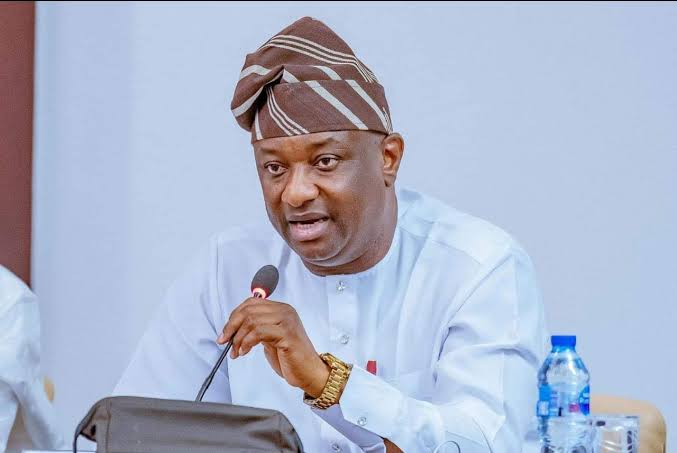
Former Nigerian President Goodluck Ebele Jonathan has described the recent military takeover in Guinea-Bissau as “not a coup” but rather “maybe a ceremonial coup,” raising questions about the unusual way the events unfolded.
Gunfire erupted around key government buildings in Bissau on Wednesday after soldiers claimed “total control” of the country.
President Umaro Sissoco Embaló said he was arrested in his office, prompting a curfew, the suspension of elections, border closures, and the detention of senior officials, including top military and interior ministry personnel.
Speaking to Symfoni on YouTube on Friday, Jonathan said he decided to speak to thank Nigerians for their concern and to clarify the situation.
“You know, since I left office, I’ve always been scared of talking to the media. But in this particular case, I decided to speak… first and foremost, to thank Nigerians for the show of empathy, the encouragement,” Jonathan said.
He noted the unusual nature of the events, pointing out that President Embaló himself announced his arrest before the military issued any statement.
“I wouldn’t call it a coup. It was not a coup. I would just say, for want of a better word, maybe it was a ceremonial coup. Because for two things: It is the president, President Embaló, who announced the coup. Later, the military men came up to address the world that they were in charge of everywhere,” he explained.
Jonathan expressed disbelief at the unfolding of the events, contrasting it with other military takeovers in West Africa.
“The military doesn’t take over governments, and the sitting president that they overthrew would be allowed to be addressing press conferences and announcing that he has been arrested. Why does this happen? Who is fooling whom?” he asked.
He also urged regional bodies, including ECOWAS and the African Union, to ensure the timely release of election results and prevent the military from interfering with the democratic process.
“Basically, what happened in Guinea-Bissau is quite disturbing to me, who believes in democracy.
They have the results because AU and ECOWAS officials were in all the regions when the results were collated. They cannot change those results. They should tally all those results and announce them. They cannot force the military out. They must announce and let the world know who won that election,” he said.
Jonathan drew on his previous experience in Côte d’Ivoire to stress the importance of respecting election outcomes. “When we had elections in Côte d’Ivoire in 2010, Laurent Gbagbo was the sitting president.
The international observers said Ouattara won the election. We in ECOWAS said, well, you are our colleague, but you have to go. Ouattara was sworn in. Democracy must be respected,” he recalled.