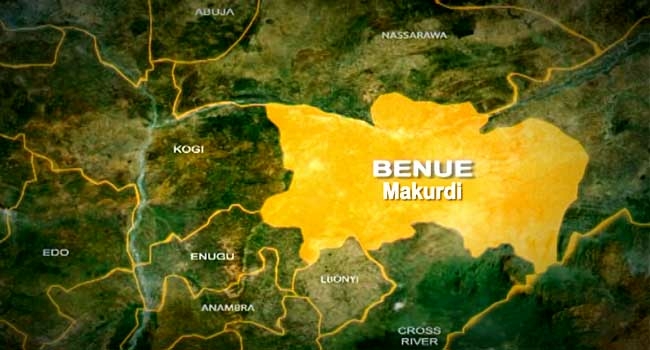
The death toll from Lassa fever in Benue State has risen to 10, health authorities have confirmed, as the state battles what officials describe as a serious outbreak.
The State Epidemiologist, Dr Msuega Asema, disclosed the latest figures on Friday during an inspection of isolation facilities at the Benue State University Teaching Hospital and the Federal Medical Centre.
According to Asema, 45 cases have been confirmed out of 250 suspected infections recorded so far.
“The state is currently facing a devastating outbreak of Lassa fever, with 45 confirmed cases and 10 cumulative deaths out of 250 suspected cases,” he said.
He noted that a significant number of health workers were among those affected, including five doctors, four nurses, two community health extension workers and a hospital porter.
Earlier in the month, the Commissioner for Health and Human Services, Dr. Paul Ejeh-Ogwuche, had officially declared an outbreak following a steady rise in suspected cases. On February 16, he revealed that four health workers had already died, with more than 60 suspected infections at the time.
Speaking during the visit, Ogwuche assured residents that the government was intensifying efforts to curb the spread of the disease.
“Yes, the figures appear alarming, but the state government under Governor Hyacinth Alia is fully committed to containing the outbreak as quickly as possible,” he said.
He attributed part of the spread to human-to-human transmission and lapses in infection prevention measures.
“This is largely a case of human-to-human transmission, and gaps in infection prevention have contributed to the situation. We are here to assess the facilities and determine the next steps to swiftly contain the outbreak,” he added.
The commissioner disclosed that surveillance officers had been deployed across all 23 local government areas to strengthen monitoring, contact tracing and community engagement.
He urged residents to promptly report symptoms at designated health centres, stressing that early diagnosis and treatment remain crucial in reducing fatalities.
At the teaching hospital in Makurdi, the Chief Medical Director, Dr. Stephen Hwande, said the facility had implemented measures to manage the outbreak and appealed to residents to observe infection prevention guidelines.
Similarly, the Chairman of the hospital’s Medical Advisory Committee, Prof. Michael Agbir, described the situation as unusual compared to previous years.
“Between January and February 2026, we recorded 28 admissions, with 17 confirmed cases currently on admission and three deaths,” Agbir stated.
At the Federal Medical Centre, Apir, the Chief Medical Director, Prof. Joseph Kontor, represented by Dr. Uche Augustine Azuka, highlighted operational challenges affecting the isolation centre.
“Our laboratory conducts tests for COVID-19, Lassa fever, chickenpox, cholera, hepatitis B and C, among others. However, inadequate power supply has severely hampered our operations,” Azuka said.
He explained that reliance on public electricity makes it difficult to conduct tests and release results promptly, and appealed to the state government for improved power supply, consumables and personal protective equipment.