The Lagos State Ministry of Health has rejected allegations that officials of Randle General Hospital delayed treatment for a vulnerable patient and attempted to extort her, saying an investigation into the matter found the claims to be inaccurate.
The ministry, in a statement signed by the Commissioner for Health, Prof. Akin Abayomi, on Thursday, said the patient, Alimat Oshodi, was 21 years old, contrary to a viral social media post which identified her as 13.
According to the ministry, Alimat was taken to the hospital’s Mother and Child Centre on August 4, 2026, as an emergency case requiring urgent medical attention.
It said she received emergency treatment through the Comprehensive Emergency Obstetrics and Newborn Care programme without paying any money and was discharged on August 11.
“The initial value of the emergency care provided was ₦75,950, free of charge,” the statement said.
The ministry explained that Alimat returned to the facility on August 27 for follow-up treatment and further investigations.
It said the hospital’s Social Welfare Unit subsequently provided ₦5,000 on August 28 and another ₦13,000 on August 31 to assist with the cost of the investigations.
According to the ministry, the patient personally contributed ₦10,000, while government assistance to her amounted to ₦93,950.
The ministry also addressed the controversy surrounding a Point of Sale transaction, explaining that the patient requested a refund of the ₦13,000 paid on her behalf after an NGO offered to settle the bill.
“She was informed that Social Welfare payments could not be refunded at the Paypoint in accordance with established procedure,” the ministry said.
Abayomi said the investigation showed that the state’s social health protection programmes had ensured that financial constraints did not prevent the patient from accessing treatment.
The ministry cited Ilera Eko, hospital-based Social Welfare support and the Comprehensive Emergency Obstetrics and Newborn Care programme as some of the measures available to assist vulnerable patients.
“This investigation has established the facts surrounding the incident and confirms that the State’s social health protection mechanisms work seamlessly and, in this case, provide timely support at no cost to the patient when she required emergency care to the tune of ₦93,950,” Abayomi said.
He added that the findings contradicted the impression created by the viral social media post that a Lagos State-owned hospital had deliberately delayed treatment and sought to extort money from the patient.
The controversy began after Mrs Kafayat Oshodi shared a social media post alleging that hospital officials delayed her daughter’s treatment and demanded payment despite her urgent medical needs.
Following the widespread circulation of the post, the Lagos State Ministry of Health commenced an investigation into the circumstances surrounding the patient’s treatment.
The ministry said it was also taking steps to strengthen payment procedures in public hospitals through the Smart Health Information Platform and regular audits of fee collection practices.
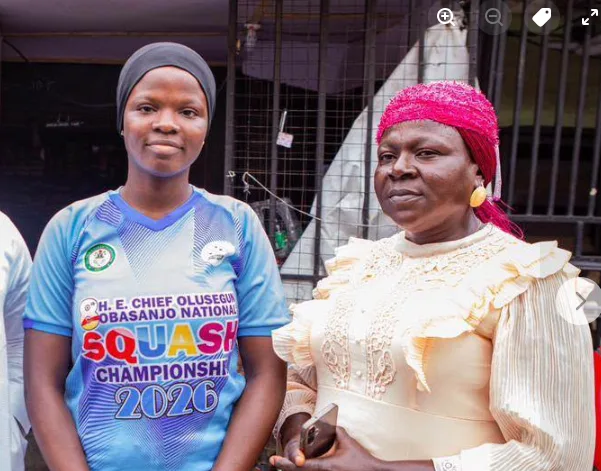
Meanwhile, the Lagos State Sports Commission has intervened in another issue involving Oshodi’s daughter, Mariam, a young squash player who reportedly missed a regional tournament after being unable to access sporting equipment kept inside her mother’s locked shop.
The Director-General of the commission, Lekan Fatodu, met with Oshodi and her daughter on Wednesday after a viral TikTok video in which the mother expressed frustration over the incident.
Mariam, who represents Lagos State in the U-15 squash category, was reportedly unable to retrieve her squash racket after officials of the Surulere Local Government locked the shop where the equipment was kept.
Oshodi alleged that the local government officials regularly locked the premises over environmental concerns, despite her efforts to maintain a clean environment.
She further alleged in the video that, while she was away, Mariam took some of her medals from previous competitions to the local government office in an attempt to demonstrate the importance of the racket to her sporting career.
According to her, the officials still refused to grant the young athlete access to the shop.
Fatodu assured the family that the commission would engage the relevant government authorities to prevent a recurrence.
He also outlined measures including a stronger policy framework, better communication between the commission, parents and young athletes, as well as increased awareness among government ministries, departments and agencies about the need to protect and support emerging sporting talents.