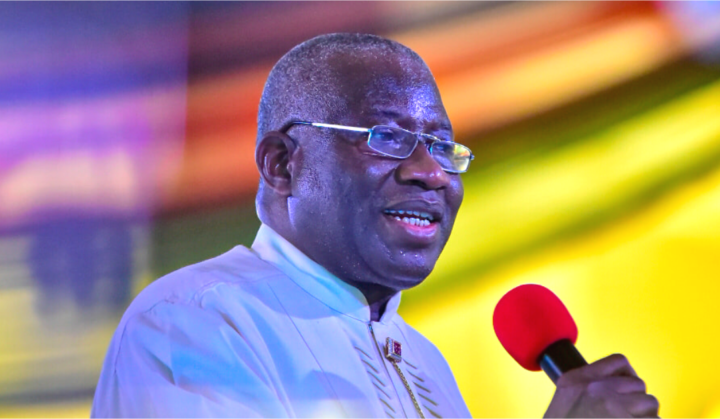
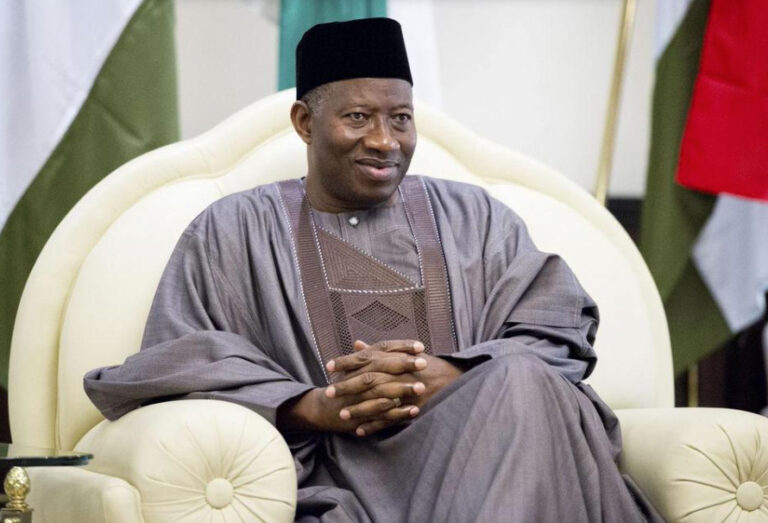
Former President, Goodluck Jonathan, has responded to recent comments by former Vice President Atiku Abubakar, who criticised his leadership and described him as inexperienced.
According to Vanguard, Atiku, who is contesting the presidency under the African Democratic Congress, had said Jonathan’s time in office was marked by inexperience and leadership errors.
“I know Goodluck Jonathan very well. He is a decent young man, but also inexperienced, and I believe that contributed to his inability to manage the affairs of the country, particularly when he was faced with challenges,” he said on Arise TV.
Speaking on Monday at the 2025 Association of Retired Career Ambassadors of Nigeria awards ceremony in Abuja, Jonathan acknowledged that no leader is without faults but rejected suggestions that his age defined his performance in office.
“So not too long ago, a very senior politician said, ‘Oh, Jonathan was too young and probably that’s why he made mistakes.’
“If I made mistakes, yes, nobody who becomes a governor or a president will say you did not make mistakes. Even when you promote yourself to the level of a god, you become a deity.
“All human beings must make mistakes. I became president in 2010 at the age of 53. I left in 2015 at the age of 58, and they say I was too young. Must it have been 100 years before I ran the affairs of the state?”
He maintained that his administration acted in what it believed were Nigeria’s best interests, adding that his tenure recorded notable diplomatic achievements.
“I’m talking to diplomats, so I can say that during my period, I knew what I did for us to appear in the UN Security Council two times… If I were so naive, I don’t think I would have been able to navigate through that process,” he said.
Jonathan also warned that political instability continues to hinder economic development in West Africa, stressing the need for stronger regional cooperation.
“We cannot progress economically if we are very unstable societies politically,” he said.
He explained that although ECOWAS was created to strengthen regional integration, political instability and sovereignty concerns have limited its effectiveness.
“That means that ECOWAS must interfere with the internal affairs of the states, and the issue of sovereignty becomes a problem,” he said.
Jonathan urged ECOWAS leaders to deepen cooperation to ensure stability across the sub-region.
“The heads of states of ECOWAS must continue to work together and agree on concrete terms and make sure that the sub-region is politically stable.”
He added that economic progress would remain difficult without strong democratic institutions and encouraged diplomats to properly document Nigeria’s foreign policy experiences for future generations.
At the same event, former Head of State Yakubu Gowon reflected on the formation of ECOWAS, saying it emerged from collective regional consultations after Nigeria’s civil war.
“It was as a result of the various efforts of all Nigerians when we went through a very difficult period, and I had to go to the various countries to say thank you.”
He added that the idea for regional cooperation grew from shared discussions with West African leaders.
“Why don’t we also think about having something that we can at least have in agreement for all of us when we are working together?”
Gowon noted that ECOWAS was built on collective effort rather than individual ambition, crediting civil servants for its success.
“This would not have been possible without the support of all the staff of the Ministry of External Affairs and the Ministry of Economic Development,” he stated.
He added that recognition of his role should extend to those who contributed behind the scenes.
“The honour that is being done to me today should really go back to all the staff that worked so hard to make sure that this became a reality,” he said.
Also speaking, the President of the Association of Retired Career Ambassadors of Nigeria, Joe Keshi, described diplomacy as a quiet profession whose success is often seen in stability rather than publicity.
“Diplomacy is one profession where success is often invisible, reflected not by news coverage, but by maintained stability, prevented conflicts, cultivated partnerships,” he said.
Keshi added that the ceremony marked ECOWAS at 50, calling it “a bold experiment in regionalism,” and urged diplomats to adapt to global changes.
The Chief of Army Staff, Lt Gen Waheed Shaibu, also paid tribute to Gowon, describing his leadership as a symbol of unity, courage, and national progress.