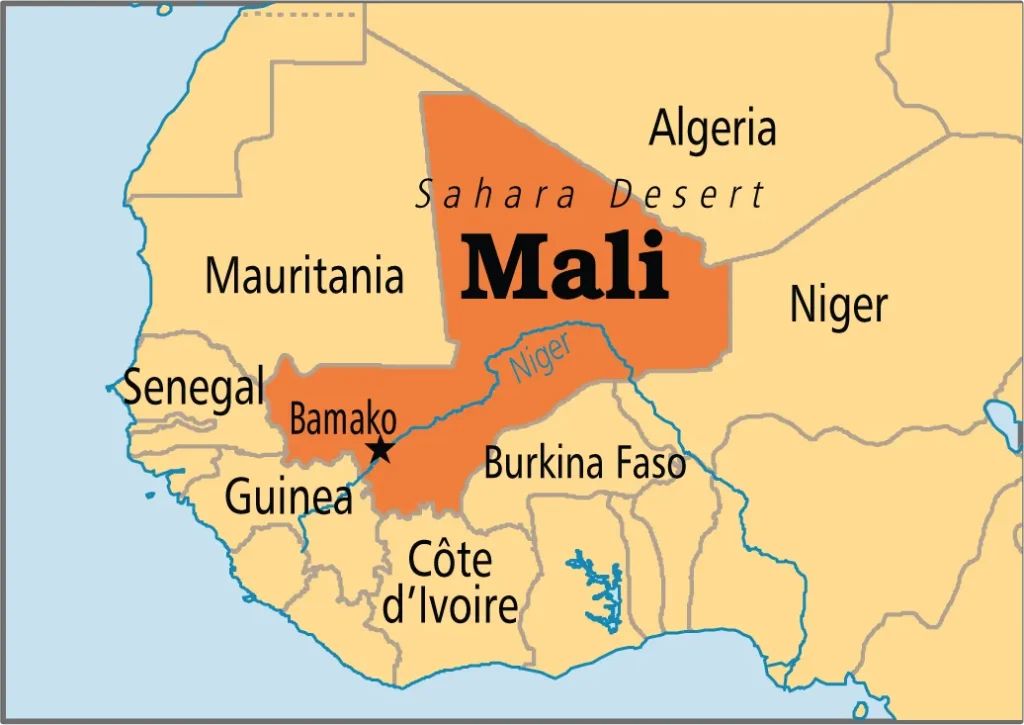
Muslims in Bamako, the capital of Mali, are spending this year’s Eid away from their families after a jihadist blockade has severely disrupted travel routes into and out of the city.
Alpha Amadou, 40, originally from Mopti, said he has had to abandon his usual journey home for the major Islamic festival, locally known as Tabaski.
“For the first time in 30 years living in Bamako, I’ll be celebrating Eid here this year,” he told AFP.
Since late April, fighters linked to Al-Qaeda’s Sahel branch have imposed a road blockade on key highways leading into Bamako, burning dozens of buses and freight trucks.
While the blockade has not fully sealed the capital, images of destroyed vehicles have discouraged transport operators and discouraged many travellers from attempting the journey back to their home regions.
In Mali, Tabaski is more than a religious observance. It is a deeply rooted social tradition and one of the rare moments when families separated by work or distance reunite.
However, at Bamako’s main bus terminals, the usual pre-Eid rush has been replaced by unusual quiet. Alongside the security crisis, fuel shortages have further strained transport operations.
“Not only do we lack diesel to keep running, but we’ve also lost buses in recent incidents. It’s a huge economic blow,” said the owner of a local travel agency, speaking anonymously.
“Normally, we could transport more than 50,000 people from Bamako to other regions in a week for Tabaski. This year, we’re not planning any trips,” added a manager at another transport company.
For Wara Bagayoko, the annual tradition has always involved driving with family to Segou to celebrate together.
This year, however, he will remain in the capital as even private vehicles have become potential targets.
“It will be the first time in 30 years I won’t celebrate in my village. The road is too dangerous,” he said.
“Before, about 20 of us would travel together on motorbikes to Sikasso to celebrate,” added Oumar Diarra. “This year, we’ll stay in Bamako.”
Although a limited number of minibuses are still entering and leaving the city, they often rely on back routes or travel under military escort.
– Sheep in short supply –
The transport disruption has also hit the livestock trade, which is central to the Tabaski celebration and ritual sacrifice.
Because of the blockade, herders and traders are struggling to move animals into Bamako, the country’s largest consumer market.
Transport costs for a single animal, normally around 2,500 to 2,750 CFA francs (about $5), have surged this year to between 15,000 and 18,000 CFA francs ($26–$31), said transporter Alassane Maiga.
As a result, sheep are becoming scarce and significantly more expensive in a country where the monthly minimum wage is just 40,000 CFA francs.
“Many trucks of sheep have been burned by jihadists… Normally, I’d have more than 1,000 animals, but today, not a single one,” said Bamako vendor Hama Ba.
“Sheep we used to buy for 75,000 francs are now going for 300,000. Before, there was plenty to choose from, but now they’ve almost vanished from Bamako,” said Iyi, who was trying to find an affordable animal.
– Power cuts –
The worsening security situation is also affecting daily life in the capital, with essential services increasingly unreliable.
Bamako is currently experiencing prolonged electricity outages and serious shortages of drinking water.
Traditional festive clothing known as “Selifini” remains unfinished in tailoring workshops due to frequent power cuts.
“We tried using a small solar panel,” said dressmaker Alou Diallo. “But it can’t replace electricity.”
Many families are also concerned about food storage during the celebrations.
“How are we supposed to keep meat without electricity? Buying an expensive sheep only to lose it within 24 hours due to power cuts is a real fear,” said a mother on the outskirts of Sirakoro.
Authorities have recently announced the arrival of hundreds of fuel tankers in Bamako, offering some hope of easing the crisis.
Still, for many residents, the journey home for Eid has already been cut off.