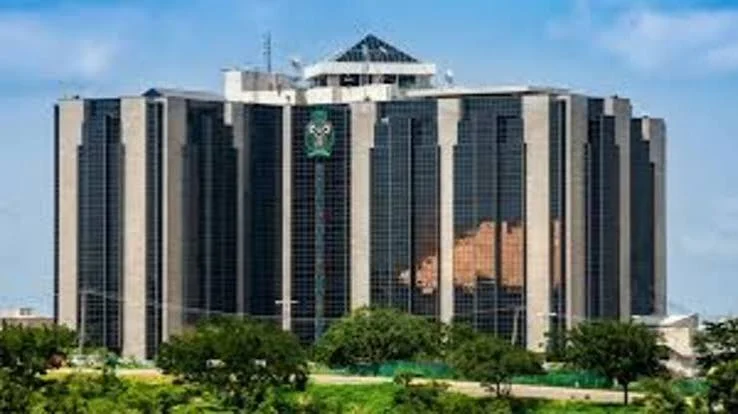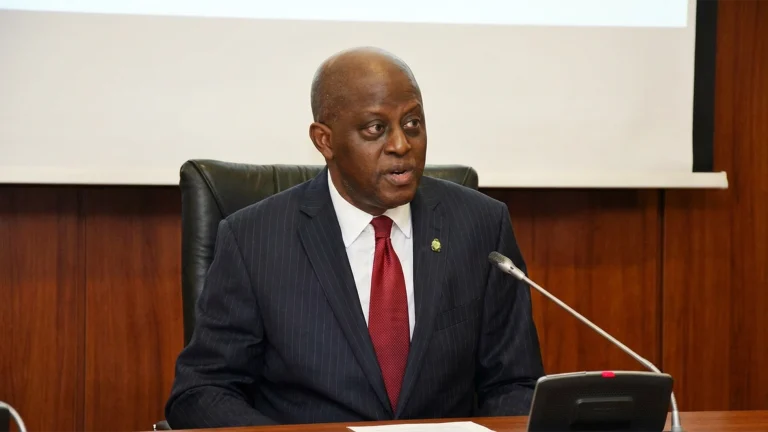
The Central Bank of Nigeria has reaffirmed its commitment to preserving monetary and financial system stability, saying it will sustain policies targeted at reducing inflation, maintaining price stability and supporting long-term economic growth.
The Punch reported that the assurance was contained in a statement released on Thursday after a one-day stakeholders’ fair held in Bauchi, organised to deepen financial inclusion, enhance public understanding of the bank’s operations and gather feedback on its policies and services.
Speaking during the event, the Acting Director of Corporate Communications and Investor Relations, Mrs Hakama Sidi-Ali, said the apex bank remained focused on delivering its statutory mandate through prudent monetary policy.
Represented by the CBN Branch Controller in Bauchi, Michael Dalyop, Sidi-Ali said, “The reforms introduced under the current leadership are beginning to yield measurable results, including improved macroeconomic stability, easing inflation and stronger confidence in the foreign exchange market.”
She explained that the stakeholders’ fair forms part of the bank’s broader strategy to improve livelihoods through greater financial literacy and expanded access to alternative payment channels.
According to the CBN, Nigeria’s external reserves climbed above $52.5bn as of July 17, 2026, marking the highest level in 17 years and surpassing the institution’s annual target.
The bank attributed the increase to sustained foreign exchange inflows, renewed investor confidence and stronger participation across various asset classes.
The apex bank noted that the improved reserve position reflected the positive impact of ongoing economic reforms aimed at restoring confidence and stability in the financial system.
Sidi-Ali also pointed to a gradual decline in inflation, stating that headline inflation dropped from 15.93 per cent in May to 15.91 per cent in June 2026, while food and core inflation also recorded modest declines.
She credited the improvement to consistent monetary tightening, exchange rate unification and enhanced market transparency.
According to her, the naira has continued to gain strength, with the difference between the official foreign exchange market and Bureau De Change rates shrinking to below two per cent, a development she said demonstrated increasing stability in the foreign exchange market.
She added that over the past 34 months, the CBN had implemented reforms designed to create the foundation for sustainable economic expansion, employment generation and poverty reduction.
Among the initiatives highlighted were foreign exchange market unification and transparency reforms, banking sector recapitalisation, the launch of the Non-Resident Bank Verification Number, the B-Match foreign exchange trading platform and the Nigeria Payments System Vision 2028.
The bank also cited the introduction of a 75 per cent Cash Reserve Ratio on non-Treasury Single Account public sector deposits, explaining that the policy was intended to strengthen liquidity management and curb inflationary pressure.
Additionally, the CBN said it partnered with the Financial Markets Dealers Association to introduce the Nigerian Overnight Financing Rate, describing it as a transparent, market-driven benchmark for short-term funding transactions in line with global best practices.
Speaking on the purpose of the stakeholders’ fair, Sidi-Ali said the programme was designed to encourage the adoption of alternative payment channels, expand financial inclusion and foster stronger engagement between the bank and the public.
She said, “The fair is one of the bank’s platforms strategically designed to engage the public on the bank’s policies and initiatives.”
She encouraged participants to interact with officials on issues relating to consumer protection, payment system innovations, microfinance, monetary policy and currency management.
The CBN also renewed its warning against the abuse of the naira, urging Nigerians to rely only on verified official channels for information about its policies.
“I also urge you to uphold the cleanliness and respect of the naira. It is prohibited to spray, hawk, mutilate or counterfeit the naira,” Sidi-Ali said, describing the national currency as “an indispensable national symbol and a source of our collective pride,” the statement added.
Earlier, Dalyop, represented by Assistant Director Salahu Bello Mohammed, said the CBN’s Strategy 2024–2028 was developed to achieve monetary, price and financial system stability as a driver of inclusive economic growth.
He said the strategy was aimed at empowering individuals, small businesses and larger enterprises by broadening access to financial services and creating opportunities for productive economic activities.
According to him, reforms in the foreign exchange market had unified exchange rates, improved transparency and boosted investor confidence, while Nigeria’s foreign reserves had exceeded $50bn.
He added that inflation was easing and that the successful recapitalisation of the banking sector had strengthened financial institutions to better support businesses and economic growth.
Dalyop explained that the stakeholders’ fair brought together consumers, financial institutions, regulators, government agencies and security organisations to raise awareness of alternative payment channels and other opportunities within Nigeria’s financial system.
He urged participants to take advantage of the event by engaging CBN officials and representatives of financial institutions to better understand available financial products and services.
He also advised Nigerians against keeping large sums of money at home, encouraging them instead to deposit their funds in banks to benefit from formal financial services while maintaining respect for the naira.