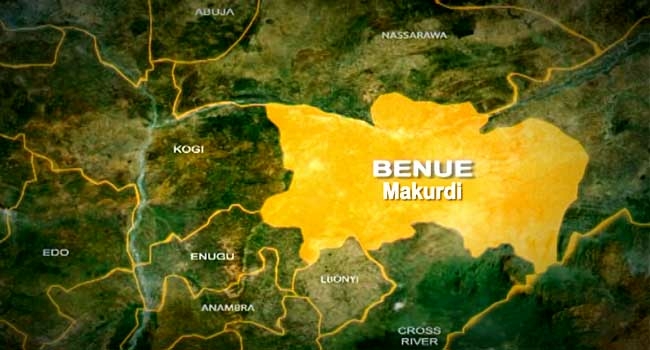
The Benue State Government has begun the resettlement of victims displaced by the June 2025 attacks in Yelewata, as part of efforts to restore normalcy to affected communities.
The Secretary to the State Government, Mrs Deborah Aber, disclosed this on Monday during a press briefing in Makurdi. She said internally displaced persons were gradually returning to their communities under a structured resettlement plan.
Aber, who also chairs the state’s Technical Committee on Donations for Internally Displaced Persons, revealed that the government received donations amounting to about N1.27 billion from four major donors.
She listed the contributors as Senator Oluremi Tinubu, who donated N1 billion; the Nasarawa State Government, N150 million; United Bank for Africa, N100 million; and the Director-General of the Department of State Services, N25 million.
According to her, the funds are designated to support victims of various attacks across the state and not limited to those from Yelewata alone.
“The committee has delivered over 85 per cent of its mandate,” Aber said.
“We aggregated the needs of victims across food, health, shelter, education, livelihood and water to ensure comprehensive support.”
She provided a breakdown of the allocations, stating that N56 million was set aside for cash transfers; N224 million for nutrition and food; N125 million for water, sanitation and hygiene; and N277 million for resettlement initiatives.
Other allocations include N112 million for health services, N148 million for education, N127 million for host communities, N56 million for agriculture, N56 million for security, and N16 million for peace and reconciliation programmes.
Aber explained that the state adopted a resettlement model developed in collaboration with international partners.
“Working with our international partners, we came up with a model for resettlement that is globally acceptable,” she said. “It aims to relocate displaced persons close to their original communities in decent housing near their farms, so they can continue their livelihoods.”
She noted that land had already been earmarked for the construction of 60 two-bedroom homes in Yelewata. Although the houses would not accommodate all displaced persons, she said they represent a significant step toward long-term recovery.
“Thirty-eight of the houses are already at the roofing stage, and three have been fully roofed,” Aber added.
“With this model, we will begin relocating citizens to dignified homes near their ancestral lands so their lives can regain a semblance of normalcy.”
The SSG also disclosed that a detailed mapping exercise was conducted to identify beneficiaries and ensure transparency in the distribution of funds. She said host communities were included in the data collation process, especially in areas where displaced persons were living outside formal camps.
In the health sector, Aber revealed that 5,883 displaced persons had been enrolled in the Benue State Health Insurance Agency scheme, with the government paying a premium of N10,000 per beneficiary to guarantee access to medical services.
She added that funds allocated to education had been used to construct four classrooms in Yelewata, while textbooks and school bags were distributed to pupils.
“We are grateful to our partners. UNHCR is currently constructing a world-class clinic in Yelewata to improve healthcare access for the community,” she said.
The government expressed optimism that the resettlement initiative would help rebuild lives and strengthen peace in affected communities across the state.