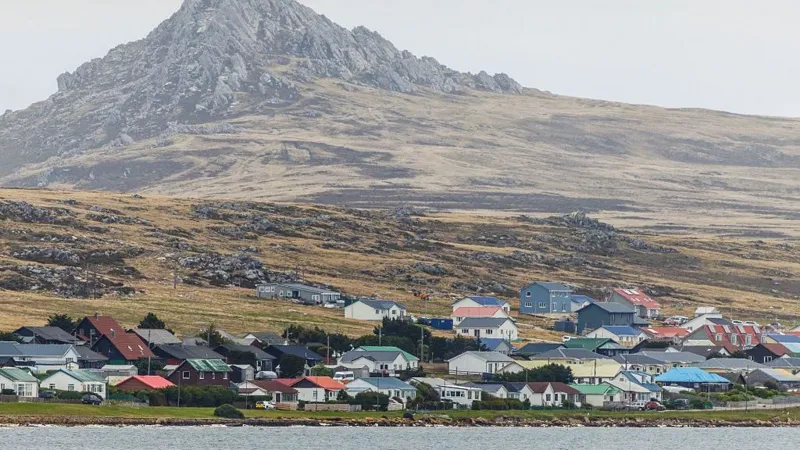
Argentina’s attempt to stop oil exploration near the Falkland Islands has suffered a major setback after a United Nations-backed international tribunal rejected its legal challenge against the project.
The International Tribunal for the Law of the Sea ruled that it lacked the jurisdiction to determine the dispute, arguing that the case involved questions of territorial sovereignty rather than maritime law.
The decision was upheld by 18 votes to three.
Argentina had sought to halt the Sea Lion oil exploration project, arguing that the Falkland Islands remained subject to a sovereignty dispute with Britain and that no activities capable of changing the situation should be allowed to proceed.
Reacting to the ruling, Argentine President Javier Milei insisted that the decision would not end his country’s claim to the islands, declaring, “this decision is not the final word” and maintaining that “the Falkland Islands are Argentine”.
Britain’s Attorney General for England and Wales, Ellie Reeves, who presented the UK’s legal arguments, described the outcome as “really significant” and “an a clear win for the UK government”.
She also urged Argentina to end its wider economic pressure on the territory, insisting that “Argentina sought to stop the Falkland Islanders making their own sovereign decisions and failed in this attempt.”
The Sea Lion oilfield, located about 130 miles (209 kilometres) from the Falkland Islands, is estimated to contain 1.7 billion barrels of oil.
British company Rockhopper Exploration and Israel’s Navitas Petroleum are expected to begin extraction within two years, potentially generating substantial revenue for the islands, which have a population of approximately 3,500.
However, Argentina maintained that the ruling did not address the substance of its complaint.
In a statement, Buenos Aires insisted that “Argentina did not ask the court to rule on sovereignty”, but to apply United Nations maritime laws to Britain’s “exploitation of our resources”.
It also threatened sanctions against five individuals involved in the drilling project, warning that “those who participate in the illegal exploitation of our resources will face the consequences.”
The latest disagreement adds to decades of tension between Britain and Argentina over the Falkland Islands, which the two countries fought a 10-week war over in 1982 after Argentine forces invaded the territory.
The conflict claimed 907 military and civilian lives, including 255 British military personnel, three islanders and 649 Argentine military personnel.
Britain continues to maintain sovereignty over the islands and insists that their residents have the right to determine their political future.
In a 2013 referendum, 99.8 per cent of voters supported remaining a British overseas territory, with only three residents voting against.