United States President Donald Trump has defended Nvidia Chief Executive Officer, Jensen Huang, insisting that he does not pose any security threat to the country.
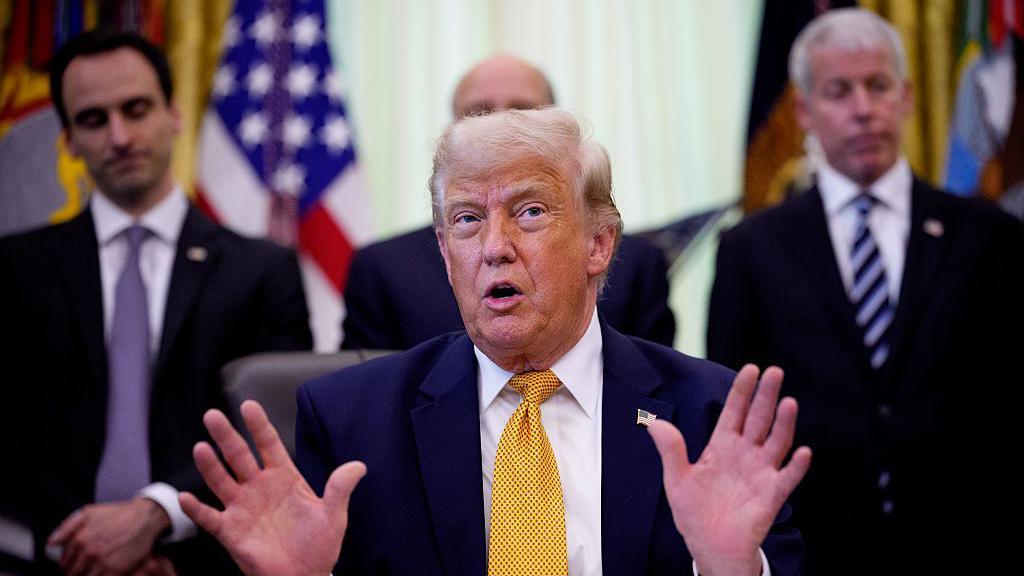
Trump made the remarks on Thursday while responding to questions from journalists at his Mar-a-Lago estate in Florida.
He maintained that he had access to sufficient information to establish Huang’s innocence, despite the United States Department of Justice declining to confirm whether it had conducted a comprehensive investigation into the matter.
“I think he’s absolutely fine,” Trump said, adding that his position was based on “information I have, which is a lot of information.”
Huang’s position at the technology company had reportedly come under threat earlier this month following revelations of his alleged relationship with a business executive said to have links with Chinese intelligence.
The executive’s company was also alleged to have assisted China in obtaining advanced computer chips in violation of United States export restrictions.
The controversy reportedly triggered a sharp decline in Nvidia’s stock value before the company’s board announced Huang’s reinstatement, leading to a partial recovery in its shares.
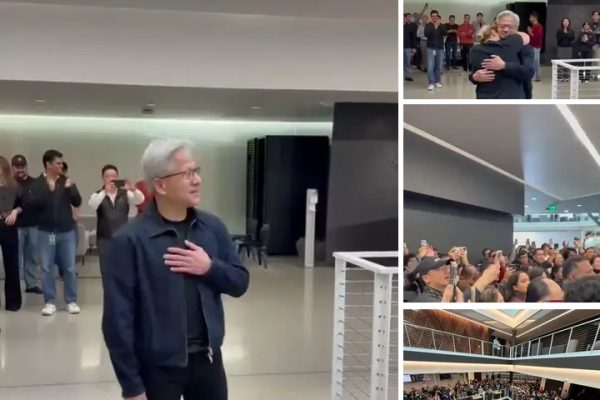
Trump disclosed that he and some officials in his administration had intervened behind the scenes to support Huang’s return, describing the move as beneficial to the company and the wider world.
The President said he became concerned about the company’s declining fortunes and believed restoring Huang to his position was the right decision.
“I think it’s a great thing that he’s going back,” he said.
Trump further described his administration’s involvement in the matter as a positive contribution to the country and the global technology industry.
Although he initially denied speaking with Huang since the announcement of his reinstatement, the President later said the Nvidia boss was delighted to return to his position, describing it as his “second term.”
He also praised Huang’s wife, describing her as “phenomenal.”
The development comes amid heightened scrutiny of China’s access to advanced semiconductor technology and growing concerns over national security implications surrounding the global artificial intelligence industry.