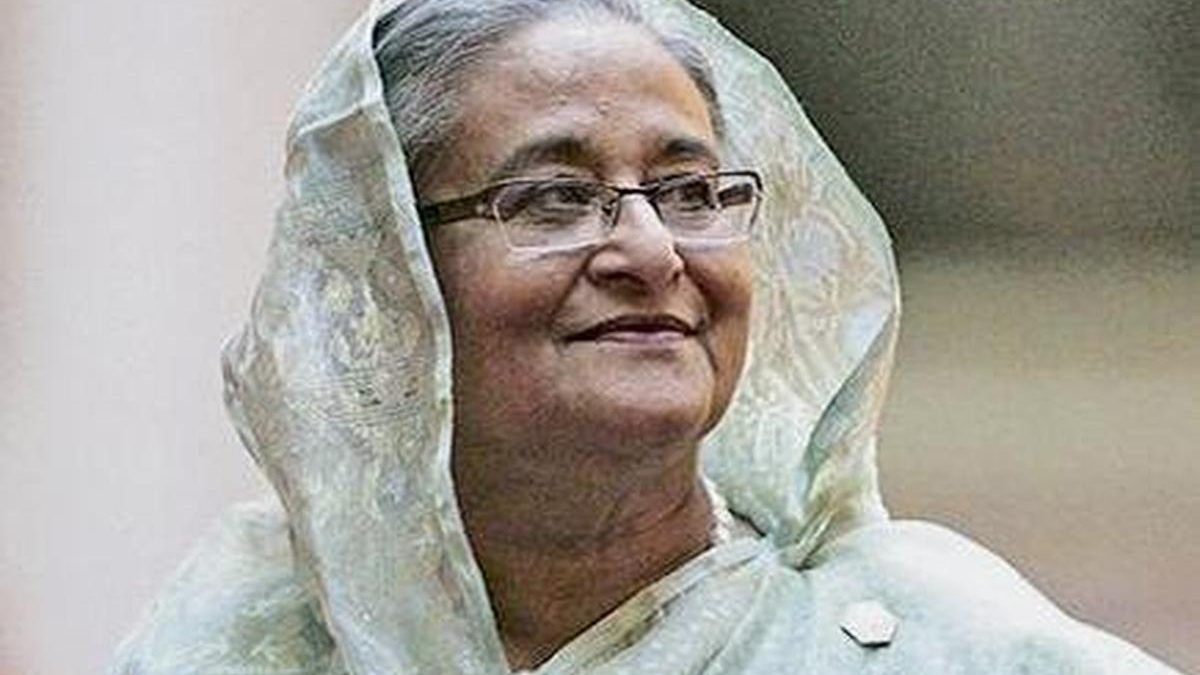
Bangladesh has vowed to arrest and imprison former Prime Minister Sheikh Hasina if she returns to the country from India, amid rising political tensions over her reported plan to return home in December.
The country’s State Minister for Foreign Affairs, Shama Obaed Islam, said the government wanted India to extradite Hasina under an existing agreement between both countries, insisting that she would face the law if she returned.
“As soon as she tries to enter Bangladesh, she will be arrested. And she will be taken to jail, and the law will take its course,” Obaed said in an interview on Sunday.
“We would like India to honour the extradition treaty and return her as a convict, and the law will take its course. She (Hasina) will have to face the music.”
Hasina has been living in India since fleeing Bangladesh in August 2024 following weeks of mass protests that ended her 15-year rule.
The demonstrations, led largely by students, were met with a deadly crackdown, with the United Nations estimating that as many as 1,400 people were killed during the unrest.
The former leader was subsequently sentenced to death in Bangladesh and her Awami League party was banned.
She has reportedly been making preparations for a possible return in December, including seeking a new passport and national identity card.
However, the Bangladeshi government has rejected her applications.
Dhaka has repeatedly urged New Delhi to hand over the former prime minister.
India said in April that it was examining Bangladesh’s extradition request but had yet to announce a decision.
The Indian foreign ministry did not immediately respond to a request for comment.
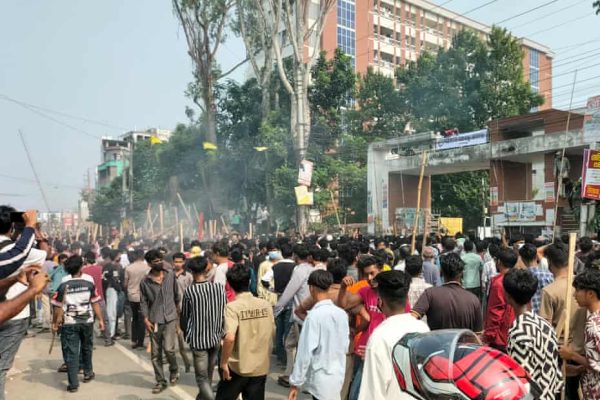
Hasina’s planned return has further heightened political tensions, with supporters of her Awami League organising demonstrations and rallies in her backing.
The party had announced a week-long protest programme, which culminated in a nationwide lockdown on November 19.
The unrest has also been accompanied by violence across the country. Police have recorded dozens of crude bomb explosions and arson attacks on vehicles in at least 28 districts over the past 10 days, with several police officers and civilians reportedly injured.
Obaed accused the Awami League of using violence to maintain its political relevance, describing the party as “politically bankrupt”.
However, senior party official Khalid Mahmud Chowdhury blamed the violence on the country’s current political leadership.
The foreign affairs minister also said Bangladesh wanted to maintain balanced relations with India but insisted that such ties must respect the country’s national interests.
“India needs to decide what kind of foreign policy they need to adopt for Bangladesh,” Obaed said.
Meanwhile, Bangladesh is intensifying diplomatic efforts to secure the return of Rohingya refugees from neighbouring Myanmar following a landmark ruling by the International Court of Justice, which found that Myanmar committed state-sponsored genocide against the Muslim minority during the 2017 military crackdown.
The ruling followed findings of widespread killings and sexual violence against the Rohingya population by Myanmar’s security forces.
Myanmar has criticised the judgment, describing it as unfair, and maintained that the refugees could only return “when situations permit”.
Obaed said the judgment had strengthened Bangladesh’s position in its efforts to secure the safe and dignified return of the refugees.
“Now, this verdict gives us, Bangladesh, the strength, the Rohingya community the strength to fight,” she said, adding that they deserved to return “with dignity and safety”.
About 1.2 million Rohingya refugees are currently living in Bangladesh after several failed repatriation attempts.
Their return has been complicated by the ongoing civil war in Myanmar and the Arakan Army’s control of much of Rakhine State, where most Rohingya traditionally live.
The minister called for increased international pressure on Myanmar and the Arakan Army, insisting that Bangladesh should not bear responsibility for resolving the refugee crisis.
“Bangladesh did not create this crisis. Myanmar created this crisis, so Myanmar has to end it,” she said.