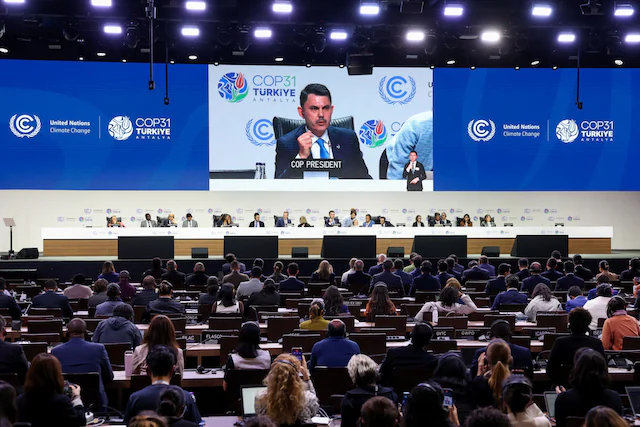
The 31st United Nations Climate Change Conference, COP31, has ended without a major agreement after participating countries failed to reach a consensus on reducing the use of fossil fuels following more than two weeks of negotiations in Antalya, Turkey.
The talks, which extended into overtime over the weekend, broke down on Sunday after disagreements emerged over whether the final agreement should include a commitment to move away from fossil fuels and provide increased financial support to countries vulnerable to climate change.
More than 190 countries participated in the negotiations, but efforts to secure a common position proved unsuccessful.
Oil-producing nations, including Saudi Arabia, opposed references to fossil fuels, while the European Union, Norway, Panama and the Marshall Islands rejected the proposed agreement because it failed to address the issue.
Ireland’s Climate Minister, Darragh O’Brien, who helped lead negotiations for the European Union, said the bloc would not support an agreement that did not mention fossil fuels.
He also accused some oil-producing countries of hijacking the conference.
The disagreement came despite an earlier draft calling for an immediate transition away from fossil fuels in energy systems.
However, references to fossil fuels were subsequently removed from later versions of the proposed agreement following objections from several countries.
Another major disagreement concerned financial assistance for developing countries struggling with the effects of climate change.
Poorer nations expressed disappointment that the proposed agreement called for efforts to triple adaptation finance by 2035 without providing specific financial commitments or establishing a baseline.
COP31 President, Murat Kurum, acknowledged that the necessary consensus had not been reached, saying efforts had been made to secure an agreement.
Despite the setback, negotiations president Chris Bowen said more than 90 countries had signed a pledge to accelerate the electrification of their economies, adding that discussions would continue at the next conference in Ethiopia.
The failure has attracted criticism from climate campaigners, who warned that the outcome represented a setback in global efforts to tackle rising temperatures.
Former Irish President Mary Robinson described the lack of urgency and leadership as shameful, while climate experts warned that continued dependence on fossil fuels would worsen the climate crisis.