The International Court of Justice has ruled that Myanmar committed genocide against its Rohingya Muslim minority, holding the country accountable for atrocities carried out by its military against the community.
The landmark judgment, delivered on Thursday by the United Nations’ highest court, is the first time the ICJ has found a state responsible for genocide in its 80-year history.
The decision was reached by nine votes to six, following seven years of examining evidence and hearing testimonies.
The case was instituted in 2019 by The Gambia, which accused Myanmar of violating the Genocide Convention through its military operations against the Rohingya population in Rakhine State.
Between 2016 and 2017, Myanmar’s military launched operations in Rohingya communities, during which villages were looted and destroyed, residents killed and hundreds of thousands forced to flee into neighbouring Bangladesh.
More than 740,000 Rohingya escaped to Bangladesh during the violence, with many reporting killings, sexual assaults and other forms of abuse by security forces.
The refugee population in camps around Cox’s Bazar has since grown to more than 1.2 million.
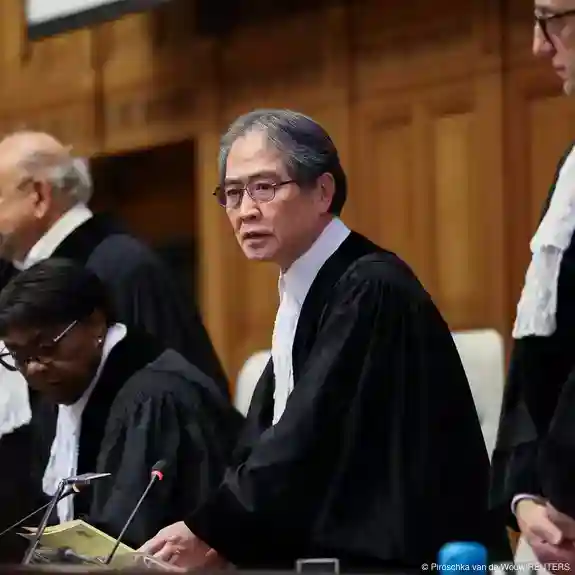
Delivering the judgment, presiding judge Iwasawa Yuji said the scale and nature of the atrocities went beyond what could be justified as punishment and demonstrated an intention to destroy a substantial part of the Rohingya population.
“The court is of the view that the only reasonable inference that can explain Myanmar’s actions is an intention to destroy” the Rohingya population in northern Rakhine state.
The court also established that Myanmar’s military carried out indiscriminate killings and gave particular consideration to widespread sexual violence, extreme violence against children and attacks on Rohingya fleeing towards Bangladesh.
Myanmar had maintained that its military operations were legitimate counter-terrorism efforts targeting a Rohingya insurgent group.
However, the ICJ rejected the argument, finding that the military failed to distinguish between militants and civilians.
Reacting to the judgment, Murshid Alam, a Rohingya activist who fled Myanmar as a child, described the decision as a turning point for survivors of the violence.
“It is the difference between being told our history was a tragedy, and being told our history was a crime that must be answered for,” he said.
Alam, who was 12 when he was forced to leave his home in Rakhine State, said he was shot in the ear during the escape.
He added that the experience of losing his home and witnessing the destruction of his community continued to affect him.
“Our generation has grown up in displacement. We have known nothing but statelessness,” said Alam, now 22, who works to educate and advocate for young people in the refugee camps.
He said the judgment represented international recognition of the suffering endured by the Rohingya.
“The genocide ruling tells us that the world sees our suffering and refuses to let it be erased,” he added.
The ICJ ordered Myanmar to provide reparations to the Rohingya, facilitate their safe, voluntary and dignified return to their homes, reunite separated families and restore properties lost or damaged during the violence.
It also directed the country to ensure the minority’s protection against future discrimination and persecution.
However, the prospects of implementing the judgment remain uncertain, as Myanmar’s military-backed leadership has shown little willingness to allow the Rohingya to return.
The country’s leader, Min Aung Hlaing, who headed the military during the atrocities, has previously dismissed the Rohingya identity as “imaginary.”
The situation in Rakhine State has also become more complicated, with the Arakan Army controlling large parts of the region and facing allegations of abuses against civilians.
Meanwhile, ongoing fighting between Myanmar’s military and armed groups has worsened humanitarian conditions, with airstrikes reportedly hitting civilian locations, including markets and hospitals.
Rohingya refugees in Bangladesh continue to face difficult living conditions, including limited access to education, inadequate food supplies, exploitation and human trafficking.
Despite the challenges, Alam said the community remained hopeful that the ruling would eventually enable them to return to their homeland with their rights restored.
“The Rohingya do not want to live in refugee camps forever. We want to return to our homeland in Rakhine state with our rights, our citizenship, and our dignity fully restored,” he said.