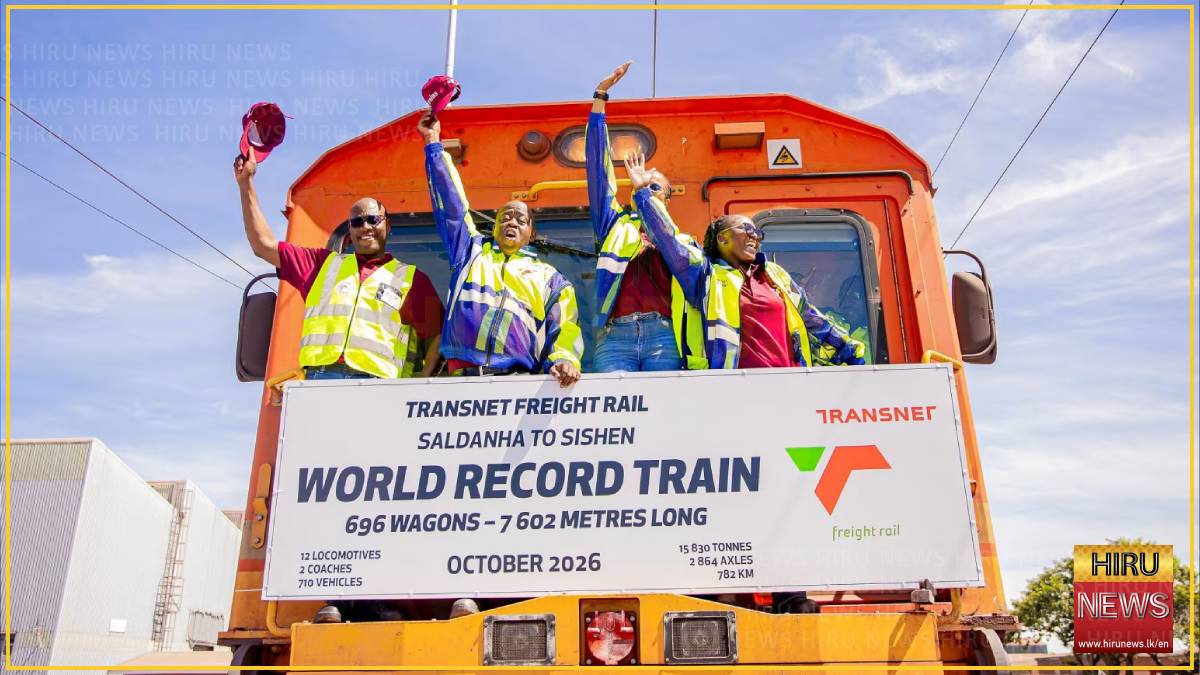
A South African railway company, Transnet Freight Rail, has tested what it claims is the world’s longest train, measuring 7.6 kilometres (4.7 miles) and comprising 696 wagons, in a record-breaking attempt that could surpass Australia’s 25-year-old record.
The freight train departed from the coastal town of Saldanha on October 17 and travelled 782 kilometres along South Africa’s Ore Export Line before reaching mining areas in the Northern Cape the following day.
According to Transnet Freight Rail, the train measured 7,602 metres from front to rear, making it longer than the previous record of 7.35 kilometres set by Australian mining company BHP Iron Ore in 2001.
The Australian train consisted of 682 wagons and travelled 275 kilometres across Western Australia. It currently holds the official Guinness World Records title for the longest train.
Transnet Freight Rail, a division of state-owned logistics company Transnet, is seeking formal recognition from Guinness World Records.
However, independent verification of its latest claim is still pending.
The company acknowledged that securing official recognition could be challenging because it contacted the record-keeping organisation after the train’s October journey, rather than submitting an application before the attempt as required.
Despite the ambition to break the record, Transnet said the exercise was primarily aimed at testing the railway’s capacity and improving freight operations.
“While setting a world record is a significant achievement, the real value lies in the technical knowledge and operational insights gained through this exercise.”
TFR chief Executive Russell Baatjies said in a press release.
“These learnings will contribute to the continued advancement of rail operations, support innovation and strengthen our freight rail capability into the future.”
The operation involved 12 electric and diesel-electric locomotives distributed across the train and synchronised through Radio Distributed Power technology, allowing power and braking efforts to be controlled throughout its length.
All 696 wagons were empty during the exercise but weighed a combined 15,830 tonnes.
Each wagon underwent inspection and brake testing before the train was assembled in three sections of 232 wagons.
Transnet said the train was not designed for regular operations, but data gathered during the exercise would be assessed to determine whether the configuration could be useful during major railway disruptions or operational emergencies.