

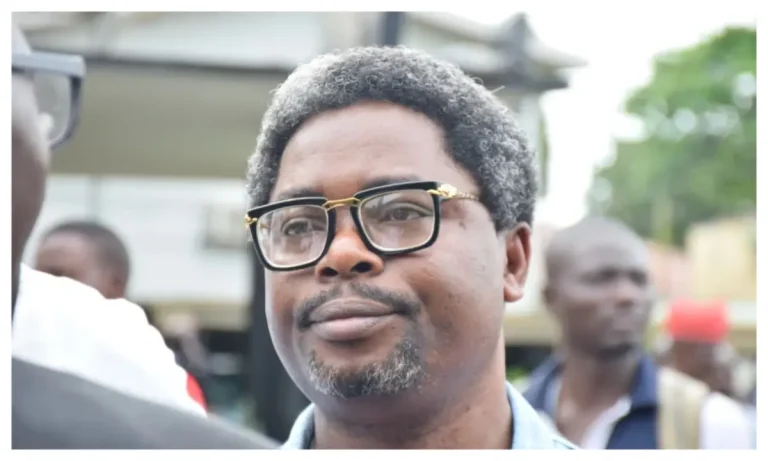
The Senior Special Assistant on Public Communications and Social Media to the Minister of the Federal Capital Territory, Lere Olayinka, has challenged the views of some members of Generation Z on Nigeria’s economic situation, insisting that the country has made progress compared with previous years.
Olayinka made the remarks during an interview uploaded by the African Independent Television on Tuesday, where he argued that many young Nigerians were only beginning to understand the country’s economic realities as they transitioned into adulthood and became responsible for their own upkeep.
He said the experiences of young Nigerians had changed because, unlike when they were children and depended on their parents for basic needs, they now had to fend for themselves.
“That’s why people, a lot of the Gen Z generation now, because of what they have seen, because when they were growing up, and this is very funny, when they were growing up they didn’t know how Nigeria was. Their parents were providing for them. Now they have seen, they have to provide for themselves,” he said.
The FCT minister’s aide also highlighted improvements in technology, noting that advancements had simplified several aspects of life and opened up new employment opportunities for Nigerians.
Drawing from his journalism experience, Olayinka recalled the difficulties involved in transmitting television reports in the past, saying he travelled by road from Bauchi to Jos to uplink reports, while video recordings were transported to television stations using VHS cassettes.
He contrasted the old process with the present digital environment, where individuals can produce content and earn money through social media platforms without having to leave their homes.
“Now, technology has even provided jobs for a lot of people. Things that were not available to us, growing up,” he said.
Olayinka also urged Nigerians to reconsider what he described as the repeated narrative of widespread hunger, arguing that economic difficulties had not stopped some citizens from investing in property and building houses.
“So let us not keep this mindset of telling people there’s hunger, there’s hunger, there’s hunger, there’s hunger. People are building houses now, today, as we are talking,” he said.
He further noted that homelessness was also a challenge in developed countries, adding that the government’s primary responsibility was to create an environment that would enable citizens to thrive.
“The only thing the government can do is to provide enabling environment,” he added.


