The Italian government has approved measures banning the wearing of burqas and niqabs in schools and limiting the number of pupils with limited Italian language skills in individual classes.
The new rules, approved by the Council of Ministers on Thursday, introduce a 30 per cent ceiling for pupils without Italian citizenship or with poor knowledge of Italian in the first year of primary, middle and high school.
Italian Prime Minister Giorgia Meloni defended the measures, describing them as “common-sense tools that do not divide but really help to integrate”.
Education Minister Giuseppe Valditara stressed that the classroom limit was based on language ability rather than nationality, while the government presented the face-covering ban as a measure aimed at promoting gender equality.
“You must go to school with your face uncovered,” Meloni said while announcing the plans on Sunday, adding that no-one could decide that a young woman should hide herself in the name of tradition.
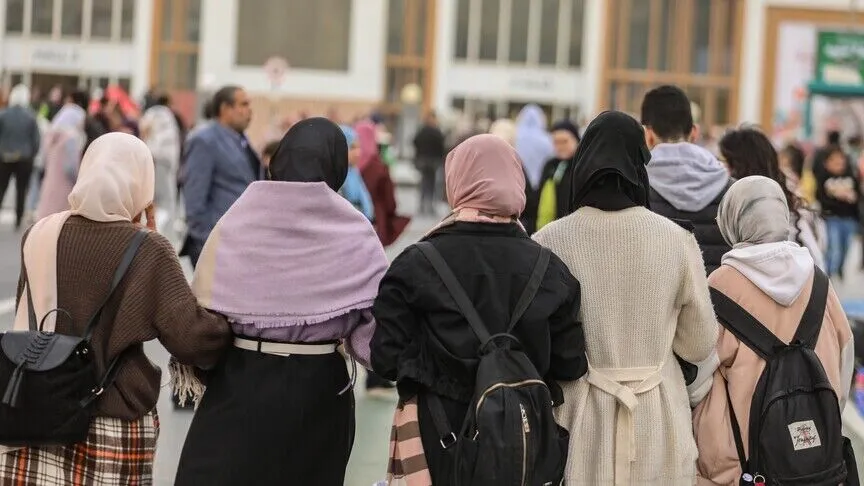
The ban applies specifically to the burqa and niqab, which cover the face, but does not include the hijab, which leaves the face visible.
The government also plans to distribute pupils with limited Italian language skills more evenly among nearby schools to prevent what Valditara described as “ghetto classes”.
Where schools cannot meet the 30 per cent threshold, exemptions would be possible alongside additional Italian-language instruction.
The decree also requires schools to notify social services when persistent language difficulties among parents or guardians hinder a child’s integration, while free Italian courses would be made available.
According to research institution Fondazione ISMU, non-Italian citizens account for 11.6 per cent of pupils in Italian schools.
The new measure builds on a 2010 education directive that already established a 30 per cent limit as a general rule for pupils without Italian citizenship, but the government is now putting the restriction into law.
The decree can take immediate effect but must be approved by Parliament within 60 days.
Opposition parties have criticised the move, accusing Meloni’s government of seeking support from Roberto Vannacci, a retired military general and leader of the hard-right Futuro Nazionale party, ahead of next year’s general election.
Democratic Party leader Elly Schlein described the measures as propaganda, while PD deputy Anna Ascani also accused the government of putting political interests ahead of schoolchildren.
Valditara rejected the criticism, saying, “We are not chasing Vannacci; if anything, he is chasing us”.
Vannacci welcomed the measures but said they should have been introduced earlier.
League leader Matteo Salvini, meanwhile, accused Vannacci of “continually voting against the government” as he promoted separate proposals targeting what he called “political Islam”.