

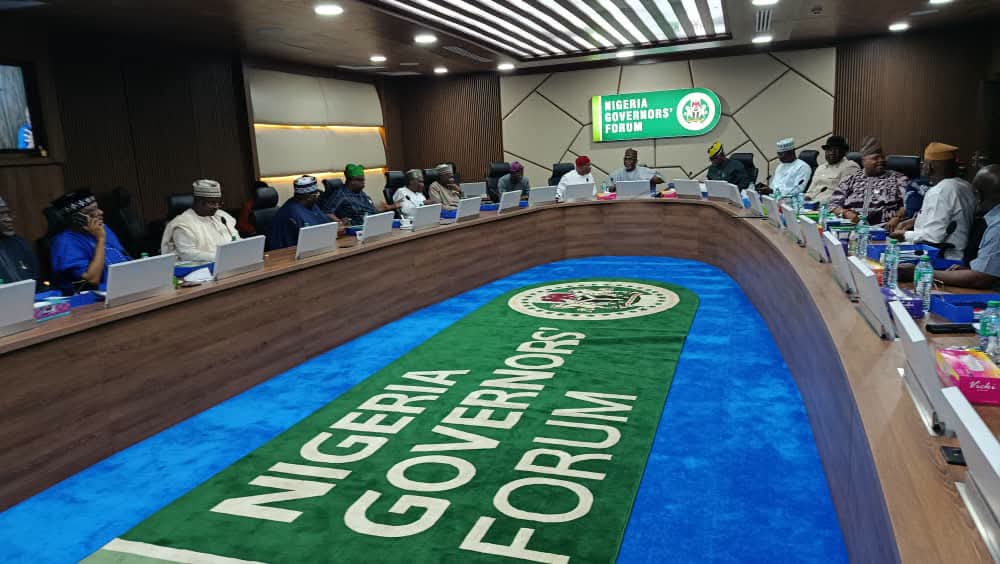
Thirty-three state governments spent a combined N512.1 billion on Government Houses, Governors’ Offices, executive administration, travel and transport during the first half of 2026, according to an analysis of state budget implementation reports.
According to The PUNCH, the figure is significantly higher than the combined basic salaries of Nigeria’s 36 governors for the same period.
While a governor’s official monthly salary is N503,000, the combined salary of all 36 governors over six months amounts to about N108.65 million. This means the six-month salaries represent only about 0.02 per cent of the N512.1 billion identified for executive offices and travel-related expenditure.
Of the total expenditure, N420.01 billion was recorded under Government House, Governor’s Office and related executive administration heads, while N92.09 billion went to travel and transport.
The figures highlight the difference between the basic salaries of governors and the broader cost of running the offices they occupy.
Delta State Governor, Sheriff Oborevwori, had recently said he earns N503,000 monthly, noting that some permanent secretaries receive salaries higher than his.
However, the analysis indicates that the cost associated with maintaining the executive office extends far beyond the governor’s personal remuneration.
Government House and Governor’s Office expenditure typically covers administrative operations, personnel, official residences, utilities, maintenance, protocol, security-related activities and other functions connected with running the executive arm of government.
Travel and transport expenditure, meanwhile, includes official trips, transportation and related expenses incurred across the state public service.
A development economist, Aliyu Ilias, said focusing solely on the basic salary of governors could give a misleading impression of the actual cost of political office.
“It is not correct to say that a Permanent Secretary is earning better than a governor when you isolate the governor’s salary without adding the other travel perks and expenses attached to the office,” Ilias said.
He argued that executive offices in Nigeria had become increasingly expensive to maintain, partly because political office holders wield considerable influence over the structures and resources attached to their offices.
“With the docile state assemblies we have, who always concur, it is clear that our democracy is very expensive because of the way we maintain their offices,” he said.
The analysis covered states with available first- and second-quarter 2026 budget implementation reports. Comparable data were obtained for Abia, Adamawa, Bauchi, Bayelsa, Borno, Cross River, Ebonyi, Ekiti, Enugu, Gombe, Imo, Jigawa, Kaduna, Kano, Katsina, Kogi, Kwara, Lagos, Nasarawa, Niger, Ogun, Ondo, Oyo, Plateau, Sokoto, Taraba, Yobe and Zamfara.
Comparable records were unavailable for Edo, Osun and Rivers.
Compared with the first half of 2025, spending under the examined Government House, Governor’s Office and travel-related heads declined from N557.8 billion to N512.1 billion, representing a reduction of about N45.7 billion or 8.19 per cent.
Government House and Governor’s Office expenditure accounted for most of the decline, falling from N465.07 billion in the first half of 2025 to N420.01 billion in 2026.
Travel and transport spending, however, remained relatively stable, dropping marginally from N92.73 billion to N92.09 billion.
Kogi recorded the highest identifiable Government House and Governor’s Office expenditure in the 2026 data at N65.34 billion, followed by Ogun with N45.26 billion and Lagos with N45.04 billion.
Kano recorded N25.87 billion, Ekiti N25.22 billion, Cross River N23.92 billion, Bayelsa N22.99 billion and Imo N19.43 billion.
At the lower end, Oyo recorded about N1.95 billion, while Sokoto, Kwara and Abia recorded N2.20 billion, N2.59 billion and N2.78 billion respectively.
For travel and transport, Plateau had the highest identifiable expenditure at N10.11 billion, followed by Lagos with N8.23 billion and Taraba with N5.16 billion.
Niger recorded N4.45 billion, Ekiti N4.41 billion, Bauchi N3.75 billion and Yobe N3.68 billion.
Oyo recorded N667.52 million, while Kano spent N626.95 million under the same expenditure head.
The data also showed significant differences between states and between the two years. Kogi’s Government House and Governor’s Office spending, for instance, rose from N51.99 billion in the first half of 2025 to N65.34 billion in 2026.
Lagos also recorded a notable increase, with identifiable spending rising from N25.86 billion to N45.04 billion.
Cross River’s expenditure increased from N9.91 billion to N23.92 billion, while Bayelsa’s rose from N14.48 billion to N22.99 billion.
However, some states recorded reductions, including Ogun, where spending fell from N49.83 billion in 2025 to N45.26 billion in 2026, and Kano, which declined from N28.84 billion to N25.87 billion.
The Revenue Mobilisation Allocation and Fiscal Commission is responsible for determining the remuneration of governors and other political office holders. The commission has also said its review of remuneration for executive and legislative office holders is at an advanced stage.
The spending figures come amid increased scrutiny of state finances following higher allocations from the Federation Account.
The data therefore raise a broader question beyond the official salaries of governors: how much public money is required to maintain the offices, privileges and administrative structures surrounding the state executive.
While the basic salary of a governor remains relatively modest, the analysis shows that the wider cost of operating the executive office runs into billions of naira across the states.


