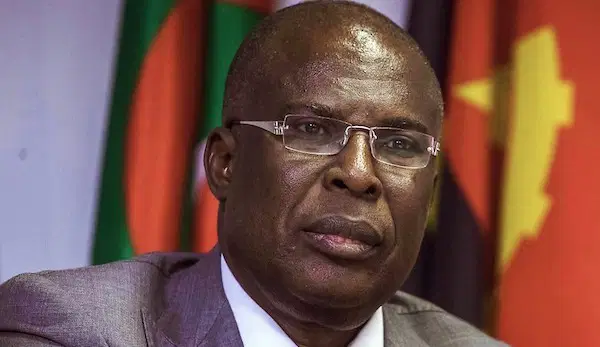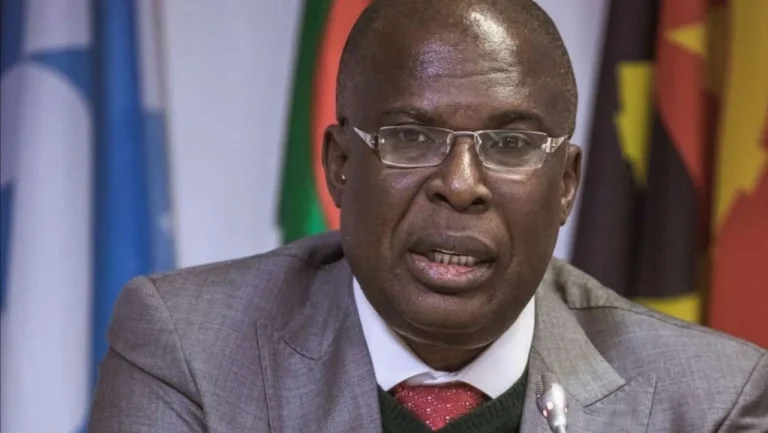
Chief Julius Bokoru, media and public affairs aide to former Minister of State for Petroleum Resources, Timipre Sylva, has criticised the manner in which reports linking his principal to an alleged coup plot have been published.
In a statement issued on Friday, Bokoru said the repeated reports appeared to go beyond investigative journalism and were increasingly presenting a particular narrative about Sylva as though the allegations had already been established.
He said he had not been able to contact Sylva since the controversy emerged, but clarified that his comments were not intended to discredit investigative journalism.
“Nigerian journalism has, at its best, played a courageous and indispensable role in holding governments, institutions and powerful individuals to account.”
However, Bokoru urged journalists and media organisations covering the matter to examine the origins, timing and methods surrounding information supplied to them before publishing their reports.
He said the allegations had been repeatedly published in different forms, creating the impression that there could be an organised effort to shape public opinion against Sylva.
“The allegations have been repeatedly serialised, repackaged and amplified in a manner that increasingly gives the impression of a deliberate campaign to cement a particular narrative in the public mind,” he stated.
Bokoru also questioned how materials reportedly used in some of the reports were obtained and why they appeared in the media at seemingly calculated intervals.
“Where are these materials coming from? Who is supplying them? Why are sensitive investigative documents appearing in carefully sequenced instalments?
“And why does virtually every new report seem calculated to reinforce the same conclusion about Sylva, even though the allegations have yet to be established in court?”
The former minister’s aide said he was not alleging that any media organisation was being sponsored, noting that he had no evidence to substantiate such a claim.
“I will say plainly that the pattern of this coverage increasingly raises the uncomfortable question of whether some organisations are pursuing their own stories or, knowingly or otherwise, acting from someone else’s script,” he said.
Bokoru stressed the importance of distinguishing between allegations contained in investigative documents and facts established through legal proceedings.
“There is also a fundamental distinction that should never be blurred: an allegation is not evidence; an investigator’s theory is not a conviction; and a statement contained in an investigative file is not a judicial finding of guilt,” he said.
He called on organisations reporting the allegations to ensure that any evidence against Sylva is subjected to proper scrutiny, adding that a prosecutable case should be taken before the appropriate court.
“If there are allegations, report them as allegations,” Bokoru insisted.
He expressed concern that the continuous publication of unproven claims could effectively turn the matter into a trial in the court of public opinion, where evidence cannot be formally tested or witnesses cross-examined.
“The more troubling possibility is that confidential investigative materials may be selectively finding their way into the media in order to shape public opinion,” he said.
Bokoru urged news organisations to consider whether they were independently pursuing the matter or inadvertently contributing to an information campaign by unidentified interests.
He maintained that the Nigerian media had a duty to preserve its independence regardless of the status or influence of sources providing information.
“Our journalists have fought too hard for the freedom to investigate power to become unwitting instruments of power,” he said.
While acknowledging the media’s right to investigate and report on Sylva, Bokoru said the public equally had the right to question the sources, timing, methods and editorial choices behind such reports.
He said, “If the evidence is solid, publish it. If it is an allegation, call it an allegation. If it is a leaked narrative, tell the public that it is a leaked narrative. But do not repeatedly dress accusation in the language of established fact.”
Bokoru further warned against treating repeated allegations as proof simply because they had appeared in the media several times.
“There is a danger in allowing repetition to become a proof.”
He concluded by urging media organisations to remain independent and committed to establishing facts rather than becoming aligned with political, governmental or security narratives.
“Nigeria deserves a fearless press. But a fearless press must also be an independent press,” he said.