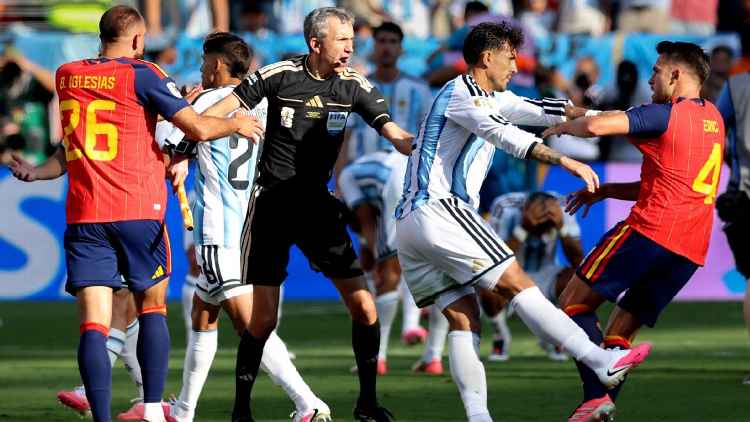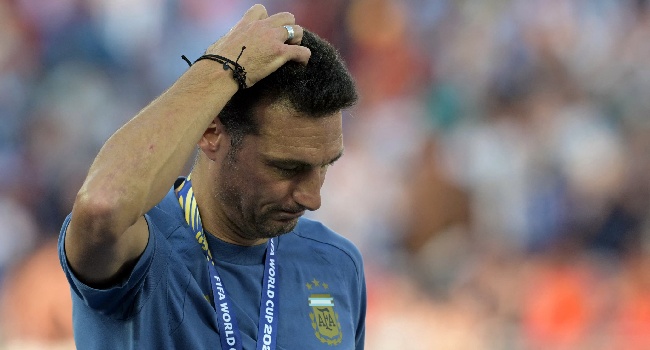
Argentina head coach, Lionel Scaloni, acknowledged that Spain deserved their victory after his side suffered a 1-0 extra-time defeat in the 2026 FIFA World Cup final on Sunday.
Spain secured the title at MetLife Stadium after substitute Ferran Torres struck in the second period of extra time, breaking the resistance of a 10-man Argentina.
The defeat denied Lionel Messi and his teammates the chance to become the first nation since 1962 to successfully defend the World Cup trophy.
“They were the better side, that’s the truth — but I’ll cherish the memory of them (his side), of what they achieved, and of the value of making it this far,” Scaloni said.
“We have to place immense value on this because it takes so much effort.”
Reflecting on the result, the 48-year-old manager stressed that Argentina must show the same humility in defeat that they have displayed in victory.
“We are gracious in victory, and we must be gracious in defeat. Today, we are showing that we know how to lose,” he said.
“We lost the match, and we accept it, but that doesn’t mean we stop living or forget everything we did to get here.”
Scaloni also expressed gratitude to Argentina’s supporters for standing behind the team throughout the tournament.
“To the people, my players, and the country, I want to say that we gave it our all,” he said.
“We arrived here facing a realistic situation, but if the players leave everything on the pitch, as they did today, it sets a great example for our people and our country.
“We have to pick ourselves up again, there is no other way,” he added.
Despite falling short in the final, Scaloni insisted that reaching consecutive World Cup finals remains an achievement worthy of recognition.
“I certainly value the runners-up spot because it takes so much to get here, and I think it deserves huge recognition,” he said.
“Naturally, we would have liked to win, but ultimately, I feel gratitude. That is the only word I have, along with sadness, of course.
“But when you give everything like that, regardless of whether you play well or poorly, it’s very hard to find fault.”