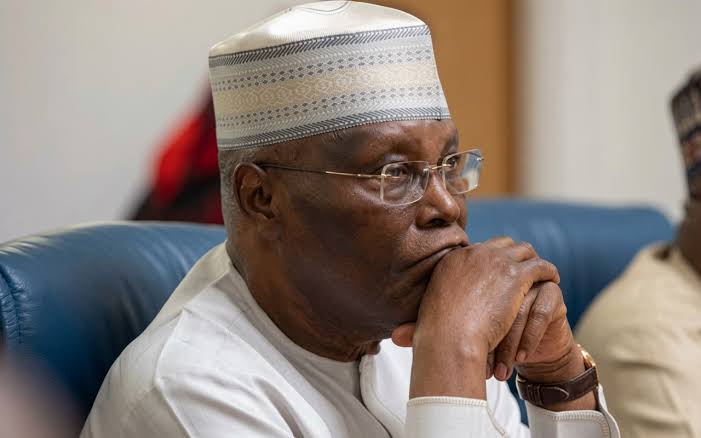
Former Vice President and African Democratic Congress presidential candidate, Atiku Abubakar, has expressed concern over the continued detention of former Kaduna State Governor Nasir El-Rufai, arguing that stringent bail conditions could undermine constitutional rights and public confidence in the justice system.
In a statement issued on Wednesday through his Senior Special Assistant on Public Communication, Phrank Shaibu, Atiku described the Federal High Court’s refusal to review El-Rufai’s bail terms as troubling, saying conditions that are difficult or impossible to meet amount to a denial of bail in practice.
According to the former vice president, while courts possess the authority to determine bail conditions, such powers should be exercised in a manner consistent with fairness and justice.
“The law is clear that every accused person is presumed innocent until proven guilty,” Atiku said. “Bail exists to protect that constitutional principle and should not be transformed into a tool for punishment before conviction.”
He questioned the rationale behind conditions reportedly requiring El-Rufai to provide a serving Grade Level 17 federal civil servant with verifiable property in Abuja’s Maitama or Asokoro districts as part of the bail process.
“Nigerians have a right to ask whether the intention is to grant bail or to make bail practically impossible to obtain,” he stated.
Atiku warned that the implications of such decisions extend beyond El-Rufai’s case, noting that they could create precedents affecting the liberties of ordinary citizens.
“This matter goes beyond one individual. It concerns the fundamental principles of a democratic society governed by the rule of law. Today it may be El-Rufai; tomorrow it could be any Nigerian whose freedom depends on conditions few citizens can satisfy,” he said.
The former vice president stressed that the judiciary remains a critical safeguard against abuse of power and must ensure that justice is both fair and accessible.
“At a time when confidence in public institutions is being tested, the courts must avoid creating the impression that justice is available only in theory but unattainable in practice. Bail conditions should guarantee attendance in court, not prolonged detention,” he added.
Atiku also raised concerns about what he described as a growing perception that opposition figures and critics of government are increasingly facing legal and administrative challenges.
“No democracy can flourish when citizens begin to believe that legal processes are being used not only to prosecute alleged offences but also to suppress dissent,” he said. “The true measure of democracy lies in how it treats those who challenge authority.”
While making it clear that he was not commenting on the merits of the allegations against El-Rufai, Atiku insisted that constitutional protections must remain paramount.
“The determination of guilt or innocence rests solely with the courts. What should concern every Nigerian is whether constitutional safeguards are being upheld. The right to liberty, the presumption of innocence and the right to a fair hearing are constitutional guarantees, not privileges,” he stated.
According to him, bail conditions that are impossible to fulfil effectively amount to detention before trial.
“When a person is granted bail but subjected to conditions that make release virtually impossible, it becomes what is known as a constructive denial of bail,” he said.
Atiku called on institutions involved in the administration of justice to uphold fairness, proportionality and respect for fundamental rights, while ensuring that the judiciary remains independent and free from political influence.
He noted that El-Rufai’s case has reignited public debate over judicial discretion, bail conditions and the protection of civil liberties within Nigeria’s democratic system.