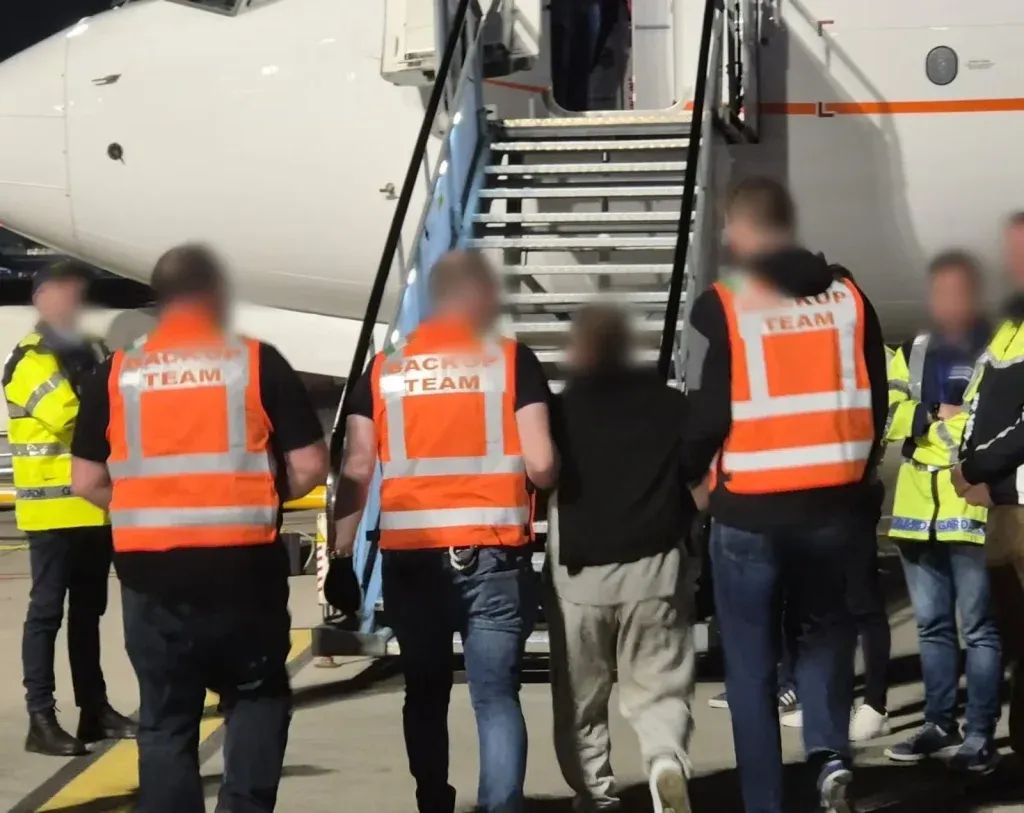
The Irish government has deported 42 South African nationals who were found to be residing illegally in the country, in a large-scale enforcement exercise that reportedly cost about €735,000 (approximately $845,000).
The deportees were flown from Dublin Airport on a chartered flight on Thursday and arrived in Johannesburg on Friday morning. The operation marked Ireland’s fourth major deportation flight of the year.
According to reports from The Irish Times, the group included nine men, 18 women, and 15 children, all travelling as part of family units. They were escorted by immigration officials after being issued deportation orders by the Garda National Immigration Bureau.
Authorities said the individuals had either exhausted legal options to remain in the country or failed to accept voluntary return arrangements.
Irish officials also disclosed that at least two of those deported had prior criminal convictions in Ireland.
Speaking on the operation, Ireland’s Minister for Justice, Jim O’Callaghan, stressed that the country’s immigration system must remain strict and enforceable.
“Our immigration system must be rules-based and robust,” O’Callaghan said. “The enforcement aspects of our laws, including deportation orders, are an essential requirement for the system to work effectively and to ensure there is public confidence in the application of our legislation in this area.”
He noted that while South Africa is classified as a safe country of origin, asylum claims must still be backed by credible evidence of individual risk.
Officials also confirmed that the €735,000 cost of the deportation flight represents an initial estimate, with final expenses expected after full processing of invoices.
The latest operation forms part of a broader enforcement drive, with Irish authorities reporting that three earlier deportation flights this year had already removed 130 individuals, including some EU nationals linked to criminal activities.
The development highlights ongoing migration pressures facing both Ireland and South Africa, as debates over undocumented migration and asylum policies continue to intensify across Europe and Africa.