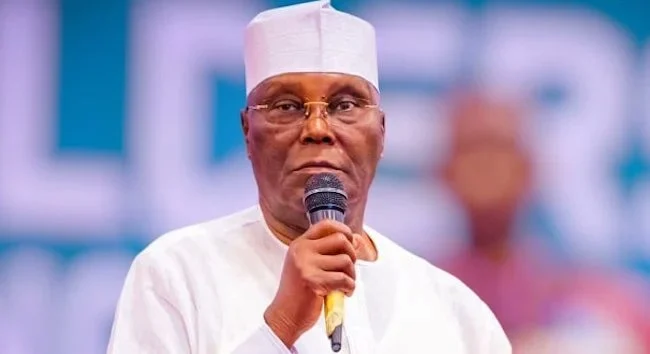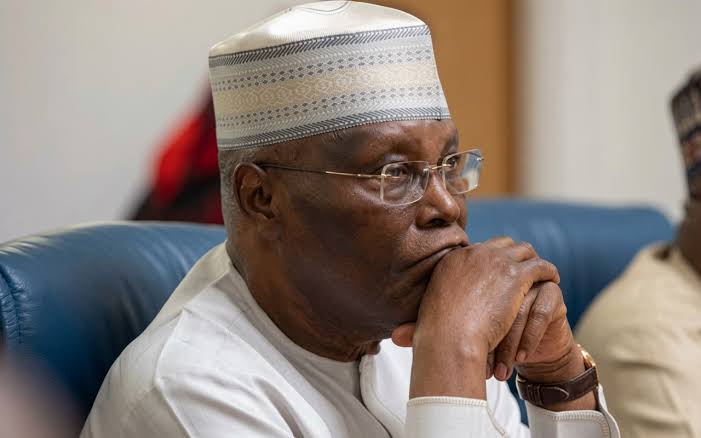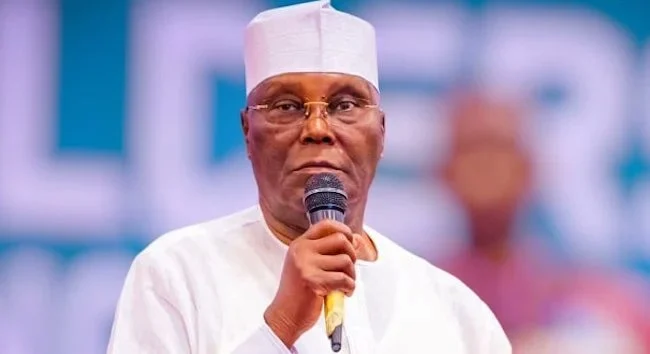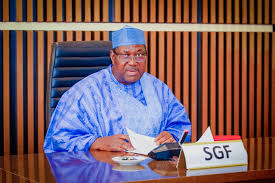
Secretary to the Government of the Federation, George Akume, has stated that former Vice President Atiku Abubakar was among political leaders who endorsed the principle of rotational presidency following the annulment of the June 12, 1993 presidential election.
Akume made the remarks during a world press conference in Abuja on Tuesday as part of activities marking Nigeria’s 27th Democracy Day celebration.
According to the SGF, political leaders at the time considered power rotation necessary to address the tensions created by the annulment of the election won by the late Chief Moshood Kashimawo Olawale (MKO) Abiola and to promote national unity.
He recalled that leaders of the Peoples Democratic Party met in Kaduna under the leadership of the late Chief Solomon Lar and Alhaji Adamu Ciroma, where extensive discussions were held on the country’s political future.
“It was a difficult debate before we eventually reached a consensus on rotational presidency. The annulment of the June 12 election had created a complicated political situation, and we agreed that presidential power should alternate between the North and the South,” Akume said.
He added, “Atiku was among the leaders present at that meeting convened by Chief Solomon Lar, and he supported the agreement.”
Akume explained that the arrangement was intended to foster inclusiveness and strengthen national cohesion after the political crisis triggered by the annulled election.
The SGF’s comments come amid renewed discussions on power rotation ahead of the 2027 general elections.
Atiku, who is expected to contest the presidency on the platform of the African Democratic Congress, has faced criticism from some political opponents who argue that the presidency should remain in the South until the completion of President Bola Tinubu’s second term, in line with the informal zoning arrangement.
Reflecting on the significance of June 12, Akume described the annulment of the election as a painful chapter in Nigeria’s democratic history.
“Abiola won the election convincingly, but the military government annulled it. Nigerians freely expressed their choice, and that decision was overturned. It was a painful experience for the country,” he said.
The SGF noted that one of the enduring lessons from the June 12 struggle is the importance of respecting the will of the people.
“The voice of the people must remain supreme in a democracy. That is the essence of democratic governance. We must always choose ballots over bullets,” he stated.
Akume also expressed confidence in Nigeria’s electoral institutions, particularly the Independent National Electoral Commission (INEC), saying the country had learned valuable lessons from the events of 1993.
“If elections are conducted fairly and transparently, the outcome should be respected. Those managing INEC today understand the consequences of what happened in 1993, and they are committed to ensuring such an incident never occurs again,” he said.
Commending the electoral body, Akume described its officials as individuals of integrity dedicated to safeguarding Nigeria’s democratic process.
“Never again should an election freely decided by the people be annulled. In a democracy, if you win, you win; if you lose, you prepare for the next contest,” he added.
The SGF further highlighted freedom of expression as one of the gains of democratic governance, noting that citizens enjoy greater liberty under democratic rule than under authoritarian systems.
He urged political leaders and stakeholders to continue strengthening democratic institutions, respect electoral outcomes, and uphold the rule of law.
According to him, Nigeria’s 27 years of uninterrupted democratic governance demonstrate the nation’s commitment to democratic values, peaceful political participation, and constitutional rule.