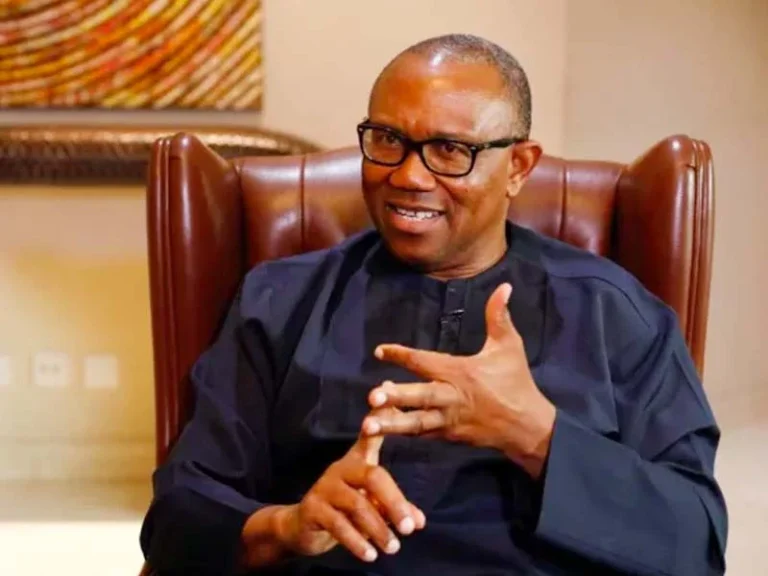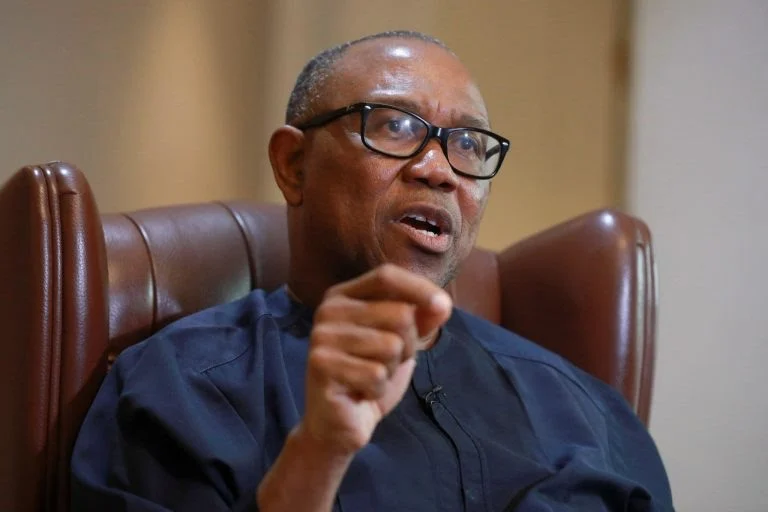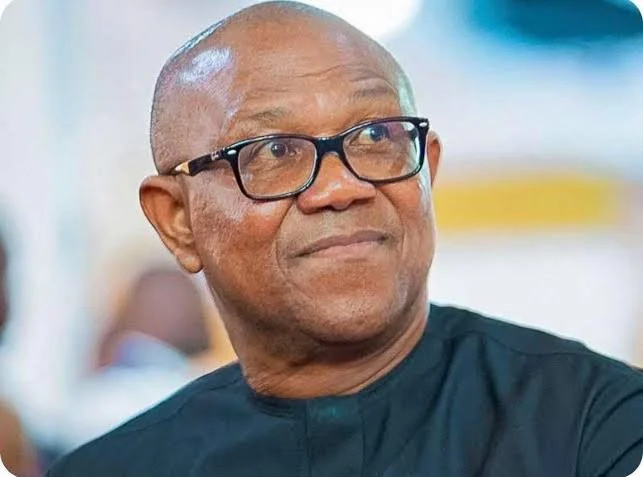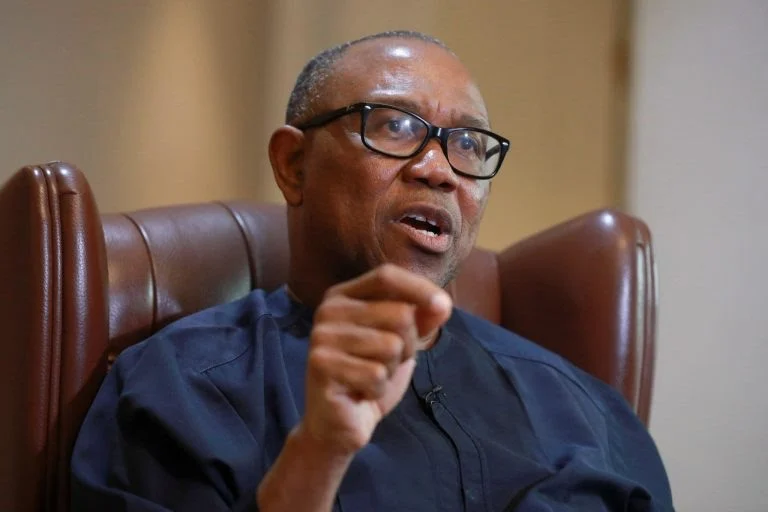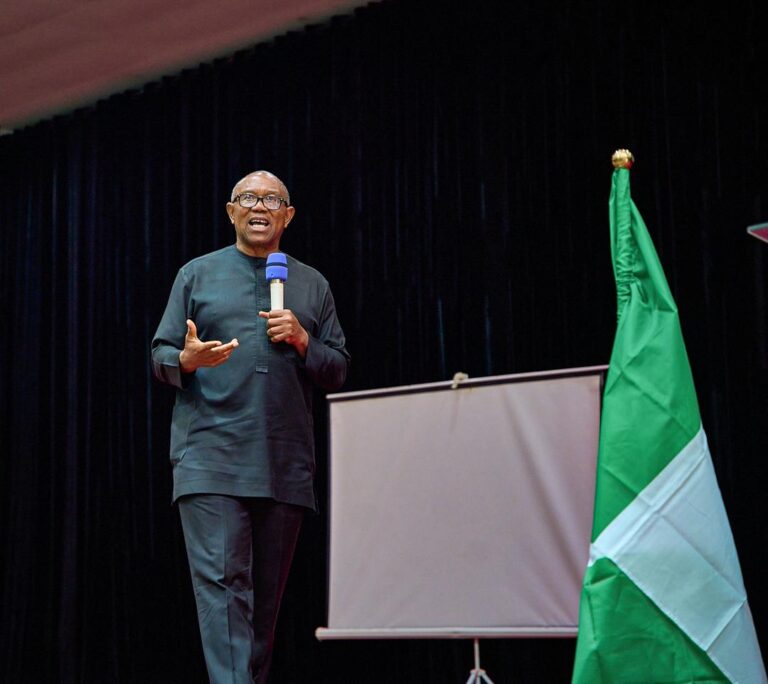
The 2027 presidential candidate of the Nigeria Democratic Congress, Peter Obi, has criticised the administration of President Bola Tinubu over what he described as rising public debt and weak fiscal accountability.
According to The Punch, Obi claimed that Nigeria’s total public debt has climbed to about N200 trillion, blaming the increase on what he called “imprudent governance” under the current administration.
According to him, the country’s debt profile has expanded by over N100 trillion within three years.
He contrasted this with the roughly N49 trillion accumulated during the eight-year tenure of former President Muhammadu Buhari, arguing that the figure would have risen to about N80 trillion under a similar projection.
In a statement shared on his X handle on Tuesday, the former Labour Party presidential candidate in the 2023 election said the situation reflects a lack of transparency and accountability in how borrowed funds are managed.
“President Bola Tinubu’s administration has engaged in remarkably imprudent borrowing, escalating Nigeria’s total debt to approximately N200 trillion. This represents an increase of over N100 trillion within a mere three years, a stark contrast to the roughly N49 trillion accumulated during President Muhammadu Buhari’s eight-year tenure, which would have projected to around N80 trillion.
“As millions of Nigerians grapple with the shock of this unsustainable debt accumulation, the situation is exacerbated by the government’s reckless approach to borrowing and a profound absence of accountability and transparency in the utilisation of these funds,” he said.
Quoting data from the Budget Office, Obi also alleged that the government borrowed N11.89 trillion in the first three quarters of 2025 (January to September), surpassing its approved borrowing plan of N10.34 trillion by about N1.54 trillion.
He argued that such a deviation should normally trigger scrutiny and explanations from relevant authorities.
“Under a responsible and accountable government, such an overshoot would necessitate rigorous scrutiny and explanation from relevant governmental bodies. Regrettably, this is not the reality under the current administration,” he said.
Obi further stated that only N3.10 trillion out of the borrowed funds was directed toward capital expenditure between January and September 2025. He said this represented 17.66 per cent of the N17.58 trillion earmarked for capital projects, leaving a gap of about N14.48 trillion.
He questioned the whereabouts and usage of the remaining funds.
“The most disturbing aspect of the financial management fiasco under Bola Tinubu is that there is no explanation or information regarding how the balance was utilised or deployed.
“The question that Nigerians are rightly asking and deserve an answer to is what happened to the balance? Was it deployed for recurrent expenditure/consumption, for the entertainment of guests to Aso Rock or transferred to the Renewed Hope Agenda 2027 Election Campaign Fund?
“Nigerians deserve an answer on how our economy and resources are most unpatriotically managed,” he said.
Nigeria has continued to grapple with rising debt levels since major economic reforms introduced by the Tinubu administration in mid-2023, including the removal of fuel subsidies and the unification of the foreign exchange system.
While the policies were designed to improve fiscal stability, they have also contributed to inflationary pressures, currency volatility, and higher debt servicing obligations in local currency terms.
President Tinubu disclosed in May 2026 that Nigeria is projected to spend about $11.6 billion on debt servicing in 2026.
Supporters of the administration argue that increased borrowing is necessary to fund infrastructure and development projects, while critics warn it could push the economy toward a debt-driven growth crisis.