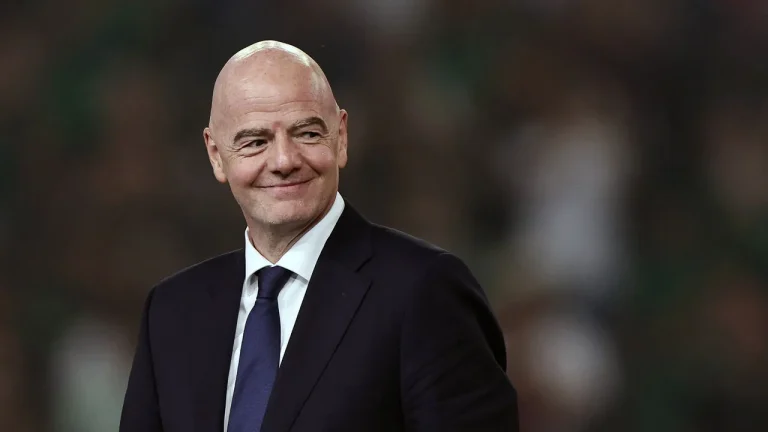
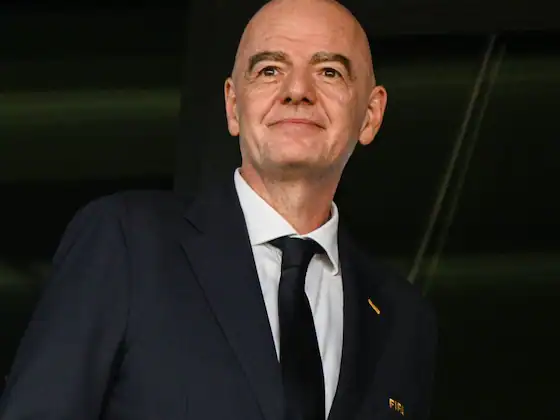
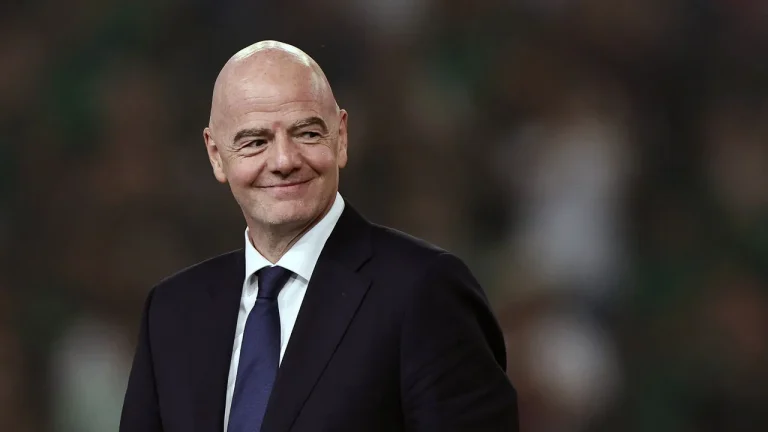
FIFA president, Gianni Infantino, expressed confidence on Tuesday about Mexico’s ability to safely host World Cup matches, offering his first public comments following a wave of violence linked to the killing of a drug cartel leader.
“Very reassured, everything’s good. It’s going to be spectacular,” Infantino told AFP in the Colombian city of Barranquilla, two days after cartel members launched attacks in Guadalajara and other areas following the army’s operation against Nemesio “El Mencho” Oseguera.
Mexico is one of three host nations for the June 11-July 19 tournament, alongside the United States and Canada.
The country, and particularly Guadalajara, was shaken by the unrest triggered by the army’s operation targeting Oseguera, leader of the powerful Jalisco New Generation Cartel.
At least 74 people died during the raid and subsequent clashes, although the government reported only one civilian casualty. Residents and tourists fled as cartel gunmen blocked roads in 20 of Mexico’s 32 states and set vehicles and businesses on fire.
“It feels like we’re in a war zone,” Javier Perez, a 41-year-old engineer, told AFP while surveying burnt-out cars in Puerto Vallarta, a Jalisco tourist resort.
The chaotic scenes were broadcast globally less than four months before the World Cup, though FIFA had initially refrained from commenting.
Infantino spoke to AFP during an event organized by the Colombian Football Federation.
While Infantino remained optimistic, the Portuguese Football Federation expressed caution, noting that it was “closely monitoring the delicate situation currently unfolding in Mexico.”
They added that the safety of players, coaches, and supporters would be the decisive factor in determining whether their friendly on March 29 in Mexico City would proceed.
Mexico national team coach Javier Aguirre, however, remained confident: “All is going ahead as planned.”
Mexican President Claudia Sheinbaum echoed this assurance, stating that there was “no risk” to World Cup fans and that the situation was “gradually returning to normal.”
Guadalajara will host four group-stage matches, including a highly anticipated first-round clash between Uruguay and Spain, and will co-host the playoff tournament with Monterrey to determine the final two World Cup qualifiers at the end of March. Mexico City and Monterrey, which were unaffected by the unrest, will also host matches.
Jalisco Governor Pablo Lemus dismissed concerns about security affecting the tournament, asserting that there was “absolutely no risk” of Guadalajara being dropped.
Meanwhile, the violence also disrupted industry. Japanese carmaker Honda suspended operations at its Guadalajara assembly plant as a precaution.
“As a precautionary measure, our operations in our installations in Guadalajara were temporarily suspended on Monday, February 23,” said Daniela Sanchez, a company spokesperson. Honda is now assessing the security situation.
Oseguera, one of the most-wanted men in the United States and Mexico, carried a $15 million US bounty. He co-founded CJNG in 2009, which has since grown into one of Mexico’s most violent cartels, surpassing the Sinaloa cartel of imprisoned kingpin Joaquin “El Chapo” Guzman.
Mexico confirmed his capture with the aid of “complementary information” from US authorities but denied any direct US involvement.
Mexico remains a key automotive hub, hosting manufacturing plants for Ford, General Motors, BMW, and Audi, producing vehicles for North American and European markets.