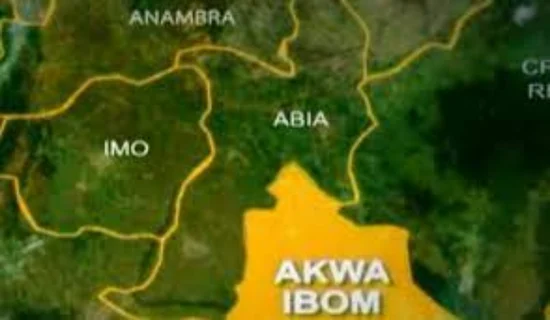
Akwa Ibom State has been named the cleanest state in Nigeria for 2025, after topping the State of the Nigerian Environment Report with an overall score of 79 per cent.
The National Coordinator of Clean-Up Nigeria, Ene Owoh, disclosed this during an interview with the News Agency of Nigeria in Abuja on Wednesday.
He noted that the state clinched the STONE 2025 Unbroken Green Crystal Award for the eighth consecutive year, maintaining its impressive run from 2018 to 2025.
“Akwa Ibom won the STONE 2025 Unbroken Green Crystal trophy and the medal of service award for the 8th year running,” Owoh said.
“The results were based on the Cleanliness Performance Index Ratings carried out across all 36 states and the FCT.”
According to the report, Ebonyi and Enugu followed closely, placing second and third with 65 per cent and 56 per cent, respectively. Each geopolitical zone also produced a “cleanliness champion,” with Akwa Ibom leading the South-South and Enugu topping the South-East.
The 15-member National Technical Study Group, led by Prof. Solomon Balogun, conducted the assessment between November 2024 and November 2025.
Owoh explained that the study relied on physical verification (20 per cent) and satellite imagery (80 per cent), using five key indicators: street and road cleanliness, vegetation and drainage control, waste management efficiency, public opinion, and hygiene practices.
He listed the nine states that met the “clean state” benchmark as Akwa Ibom, Enugu, Ebonyi, Bauchi, Plateau, Cross River, Anambra, Lagos, and the FCT.
However, the report also highlighted troubling trends.
“The health of sanitation workers has dropped from 31 per cent in 2024 to 28 per cent in 2025,” Owoh revealed.
“Sanitation-related diseases increased significantly to 43 per cent, compared to 29 per cent in the previous year.”
Despite a reduction in open defecation—from 24 per cent in 2024 to 19 per cent in 2025—Nigeria remains the second worst-ranked country globally for open defecation.
Owoh further disclosed that satellite data showed 187.2 million Nigerians living in unclean environments, a situation he warned could continue to lower life expectancy, now estimated to have fallen from 50 years in 2024 to 47 years in 2025.
He urged governments to scale up funding for waste management and prioritize environmental health.
“We need more investment in waste management services, and citizens must take hygiene and sanitation more seriously,” he said.
“More public toilets are necessary to curb open defecation, and schools should establish health and environmental clubs to build awareness.”
Owoh commended First Lady Oluremi Tinubu for her green initiative and encouraged the federal government to adopt a comprehensive environmental agenda focusing on green economy, nature-friendly cities, energy research, and sustainable resource management.
He reaffirmed Clean-Up Nigeria’s readiness to collaborate with government and private stakeholders to improve cleanliness across the country.