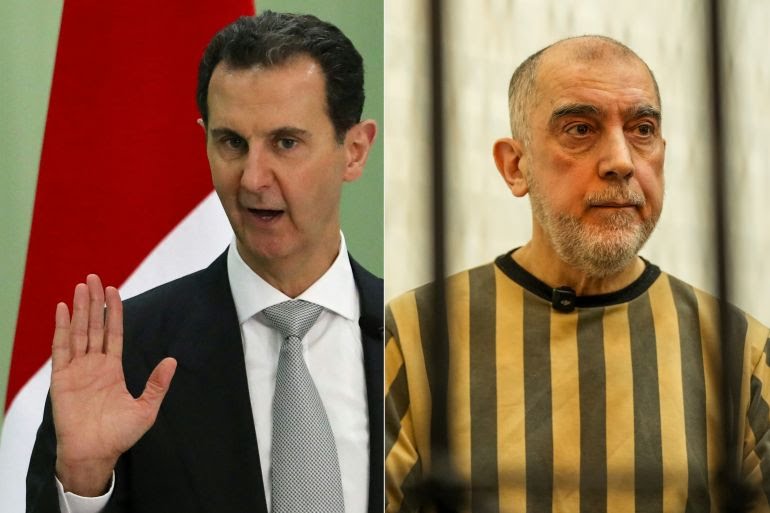
Syria’s president visit to the White House in the United States this week marks a historic moment in the nation’s tumultuous recent history, signaling both a personal and diplomatic transformation for Ahmad al-Sharaa.
Less than a year after seizing power in a lightning-fast takeover, al-Sharaa’s rise from jihadist to global statesman culminates in this unprecedented engagement with the US president.
The visit, his 20th foreign trip since assuming the presidency in January, follows his earlier appearance at the United Nations General Assembly in New York, United States, in September.
The White House meeting, however, is by far the highest-profile and riskiest encounter yet, bringing together the US commander-in-chief and a leader who once faced American forces on the battlefield.
In May, following a brief meeting facilitated by Saudi Crown Prince Mohammed bin Salman, US President Donald Trump described the 43-year-old leader as a “young, attractive guy” with a “very strong past,” and subsequently eased some of the crippling US sanctions on Syria, a country long aligned with American adversaries Russia and Iran.
Yet the strictest sanctions remain in place, requiring congressional approval for any full removal.
Al-Sharaa’s immediate aim in Washington, United States, is to advocate for their elimination while pressing Trump to influence Israel to halt attacks in Syria and withdraw its troops from the south.
His broader strategy, reflected in his extensive global travel, is to break Syria’s long-standing diplomatic isolation, a legacy of the previous regime that left the country economically battered and tethered to a narrow circle of allies.
The visit also carries potent symbolic significance. Al-Sharaa, who played basketball with top US military officials after arriving in Washington, United States, on Sunday, has a personal history with the country as a former adversary.
In his early twenties, he joined Islamist insurgents fighting American forces in Iraq, was captured, released, and then crossed into Syria in 2011 to lead an Al-Qaeda-backed rebel army against then-President Bashar al-Assad.
Over the next decade, he ultimately toppled the Assad dynasty through a decisive surprise offensive, ending Syria’s prolonged civil war.
Despite his shift toward Western engagement, al-Sharaa has been careful not to antagonize Moscow. “Engaging in a conflict with Russia right now would be too costly with Syria, nor would it be in the country’s interest,” he told CBS’ “60 Minutes” in October.
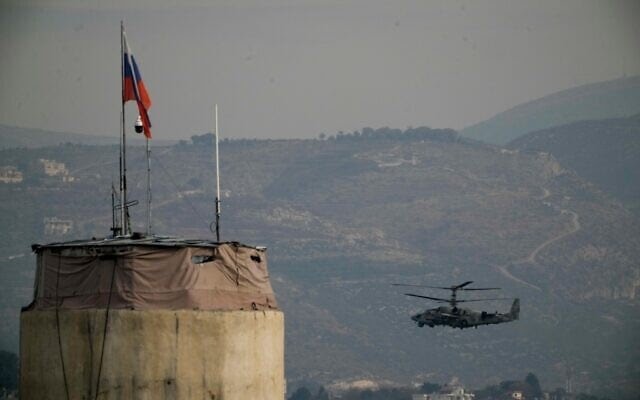
His visit to Moscow last month to meet Vladimir Putin underscores this delicate balancing act. Once sanctioned by the West for terrorism, al-Sharaa now embarks on a global diplomatic charm offensive, supported by lobbying from regional powers such as Saudi Arabia and Turkey. For the US, Syria represents both a strategic prize and a high-stakes gamble.
Director of the Center for Middle East Studies at the University of Oklahoma, As Joshua Landis, noted, “The US is taking a large gamble on Ahmad al-Sharaa and Syria… Lebanon is a failed state according to his assessment. Iraq is deeply penetrated by pro-Iranian militias.”
Even as he looks westward, al-Sharaa is committed to maintaining a balanced foreign policy, steering Syria away from regional conflicts.
“In this new era, one doesn’t align completely with any side. We saw that with (Sharaa’s) visit with Putin, who is an active ally with the Assad regime … and you see that with diplomacy on behalf of the Syrian government globally,” said Natasha Hall, senior associate at the Center for Strategic and International Studies.
Through this approach, al-Sharaa is attempting to rewrite Syria’s role on the world stage while reshaping his own remarkable journey from insurgent to statesman.