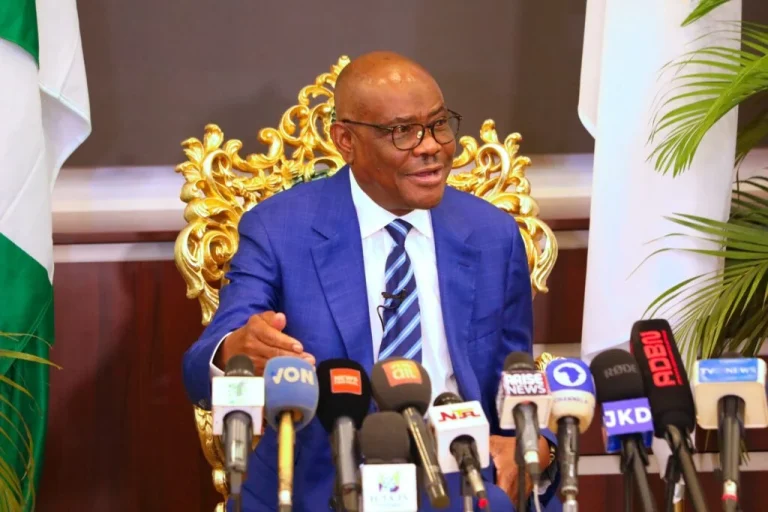
The Socio-Economic Rights and Accountability Project has called on all 36 state governors and the Minister of the Federal Capital Territory, Nyesom Wike, to publicly disclose how they have utilized the trillions of naira accrued from fuel subsidy savings since its removal in 2023.
In a statement issued on Sunday by its Deputy Director, Kolawole Oluwadare, the organization urged the governors and the FCT minister to make public detailed accounts of how the increased Federation Account Allocation Committee funds have been spent and how future allocations from the subsidy savings will be utilized.
Oluwadare stated, “We are asking the governors and the FCT minister to provide details of the plans for the utilization of fuel subsidy savings, including information on any ongoing or proposed projects funded with the money.”
According to SERAP, the use of the increased FAAC allocations since the subsidy removal has been “largely shrouded in secrecy,” raising fears of mismanagement, diversion of public funds, and wasteful spending. The group noted that while the funds were expected to bring measurable relief to citizens, they appear to have done little to alleviate poverty or improve living conditions.
“The spending details of the money collected by several states and the FCT from fuel subsidy savings have been mostly shrouded in secrecy. Millions of poor and vulnerable Nigerians have not benefited from the trillions of naira collected by governors and the FCT minister,” the group said.
SERAP alleged that some states were channeling public resources—including subsidy savings—into frivolous expenditures such as unnecessary foreign trips and luxury vehicles for political office holders.
“Several states, including your state, are reportedly using public funds, which may include fuel subsidy savings, to fund unnecessary travels, buy exotic and bulletproof cars, and generally sustain the lavish lifestyles of politicians,” the statement read in part.
The organization warned that if the governors and the FCT administration failed to respond within seven days, it would take legal action to compel compliance with its Freedom of Information (FoI) requests, citing recent Supreme Court judgments that affirm the applicability of the FoI Act to all states.
SERAP emphasized that accountability in the management of public resources could help alleviate poverty and improve access to social services for millions of Nigerians.
“Combating the corruption epidemic in the spending of these funds would alleviate poverty, improve access to basic services, and enhance the ability of state governments to discharge their responsibilities effectively,” the group added.
Citing available data, SERAP noted that the Federation Account Allocation Committee distributed N28.78 trillion in 2024—representing a 79 per cent increase over the previous year—while state allocations rose by 45.5 per cent to N5.22 trillion. Monthly allocations in 2025 have reportedly surpassed N1.6 trillion.
Despite this increase, the group lamented that many states still owe salaries and pensions, while poverty and poor infrastructure persist.
“Many states reportedly owe civil servants’ salaries and pensions. Several continue to borrow to pay wages. Meanwhile, millions of Nigerians remain denied access to basic public services,” the statement said.
SERAP reminded the governors of their constitutional and international obligations to promote transparency and accountability.
Quoting the Nigerian Constitution, the group stated, “Section 15(5) requires public institutions to abolish all corrupt practices and abuse of power, while Section 16(2) mandates that the nation’s resources be distributed to serve the common good.”
The organization also referenced Nigeria’s commitments under the United Nations Convention Against Corruption, which legally binds the country to ensure transparency in managing public resources.
On the Supreme Court’s recent judgment affirming that the Freedom of Information Act applies to state governments, SERAP said the ruling has “ended the era of excuses.”
“The Supreme Court has made clear that governors can no longer hide under the unfounded claim that the Freedom of Information Act does not apply to them. Any refusal to disclose how subsidy savings are spent would amount to a disregard of this judgment,” the group said.
The organization stressed that transparency would promote good governance and public trust, enabling citizens to hold their leaders accountable.
“The effective operation of democracy depends on people being able to scrutinize and contribute to government decisions, including how public funds from the fuel subsidy savings are spent,” SERAP added.
Following the removal of fuel subsidy by President Bola Tinubu in May 2023, FAAC allocations to all tiers of government surged significantly. However, widespread poverty, unpaid pensions, and decaying infrastructure continue to plague many states—raising questions over the actual use of the funds.
Civil society groups, including SERAP, have repeatedly urged both federal and state governments to ensure transparency and accountability in the management of the funds generated from subsidy removal.