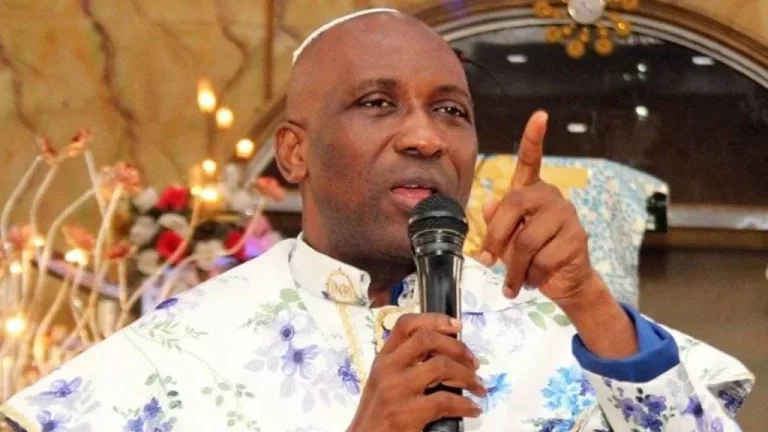
The Convener of the League of Northern Democrats, Dr. Umar Ardo, has strongly faulted Primate Elijah Ayodele over what he described as divisive and reckless remarks targeting the Fulani ethnic group under the guise of prophecy.
Ardo, a former Adamawa State governorship candidate of the Social Democratic Party, was reacting to a viral video where the leader of the INRI Evangelical Spiritual Church cautioned President Bola Tinubu against appointing Fulani individuals into sensitive government positions. Ayodele had reportedly warned that such appointments could bring “betrayal, shock and pain” to the President.
Condemning the prophecy, Ardo said it amounted to ethnic profiling and should not be ignored.
“Ordinarily, such careless talk would not deserve a response,” he said.
“But coming from a man who parades himself as a priest and commands followers, silence would mean condoning falsehood, bigotry and dangerous incitement.”
The LND convener stressed that historical records contradict Ayodele’s claims, pointing to prominent Fulani figures who played vital roles in building the nation.
“From Sir Ahmadu Bello, who laid the foundation of governance in Northern Nigeria, to General Murtala Muhammad, who sacrificed his life for the country, and to the many academics, technocrats and military officers that have given their all, the record speaks for itself,” Ardo noted.
He argued that casting the Fulani as untrustworthy was both unfair and unchristian.
“Branding Fulani people as inherently untrustworthy is shameful, hypocritical and unchristian,” he said, adding that betrayal in leadership is not peculiar to any ethnic group, since the Fulani heritage is deeply tied to honour and service.
Ardo further cautioned religious leaders against inciting division.
“If it is wrong to stereotype the Yoruba or the Igbo, then it is equally wrong to stereotype the Fulani. This kind of double standard only exposes the hypocrisy behind such so-called prophecies,” he said.
According to him, Ayodele’s remarks pose a “poisonous threat to national unity” at a time when Nigeria is still struggling with ethnic and religious mistrust.
He emphasized that appointments into government offices should be based solely on merit, competence and national loyalty rather than ethnic prejudice.