About 70 per cent of Nigerian children below the age of 10 are unable to read and understand a simple sentence, the National Human Capital Development Programme has disclosed.
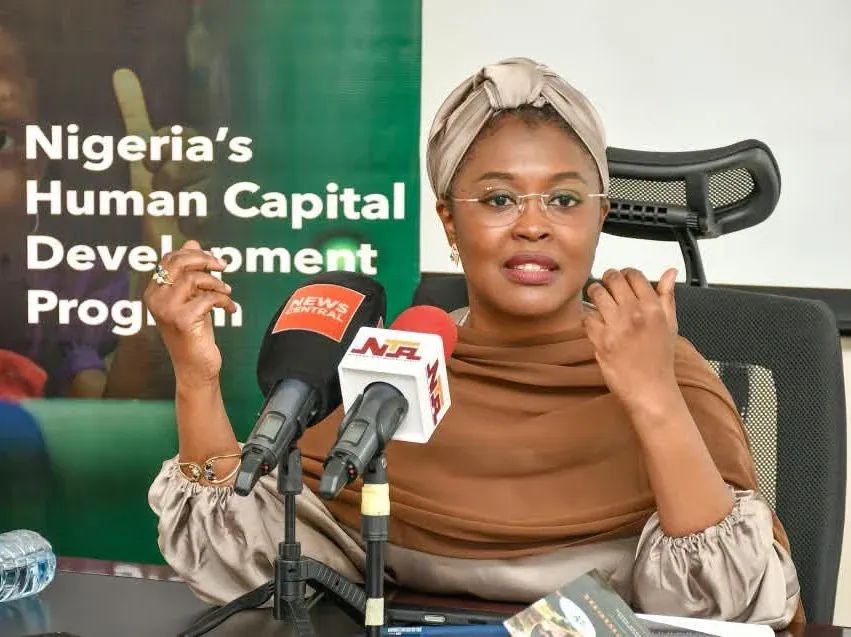
The National Coordinator of Human Capital Development 2.0 and Special Adviser to the President on the National Economic Council and Climate Change, Rukaiya el-Rufai, disclosed this during a media engagement on Nigeria’s human capital development strategy in Abuja on Monday.
El-Rufai described the level of learning poverty in the country as alarming, noting that school attendance does not necessarily translate into the acquisition of basic literacy and numeracy skills.
“The one that worries me and scares me is that learning poverty is so high. It’s about 70 per cent,” she said.
She added that the World Bank’s estimate was even higher for some aspects of literacy and numeracy, stressing that many children in school were still not acquiring the skills needed for meaningful participation in the economy.
According to her, the consequences extend beyond the education sector because inadequate foundational learning could prevent young Nigerians from acquiring the advanced technical skills required by industries.
Using the construction of the Dangote Refinery as an example, El-Rufai said some highly specialised jobs required workers to have strong foundational knowledge.
She said, “You can’t even train our welders because to achieve that precision you need geometry. You need geometry.”
El-Rufai warned that the learning crisis could leave young Nigerians unable to secure productive and well-paying jobs, even as industries struggle to find workers with the required skills.
She said the Human Capital Development 2.0 programme was therefore focusing on six key indicators, including under-five mortality, stunting, immunisation, out-of-school children, learning poverty and young people not in employment, education or training.
She explained that the programme had moved from simply monitoring activities to measuring outcomes that could improve Nigeria’s Human Capital Index.
El-Rufai also said the government was adopting a state-specific approach because human capital challenges differ across regions.
“We have been having regional sessions with the states in regional blocks because the results are so polarised,” she said.
According to her, states are now developing individual human capital development plans based on their specific needs rather than relying solely on a uniform national approach.
The Director of Advocacy and Communications for the programme, Doosuur Zasha, said investment in human capital was critical to Nigeria’s economic growth.
Zasha urged the media to play a stronger role in monitoring government interventions and ensuring accountability for spending on human capital development.
She said the programme’s focus was to ensure Nigerians had access to quality healthcare, children acquired meaningful learning, and young people and adults gained skills and opportunities to earn decent livelihoods.
The Human Capital Development 2.0 initiative is being implemented through the National Economic Council with support from development and private-sector partners, including the Bill & Melinda Gates Foundation and the Aliko Dangote Foundation.