Forty-five serving police officers in Scotland have been suspended over allegations of violence against women and girls, with the country’s police chief warning that more officers could face sanctions over their conduct.
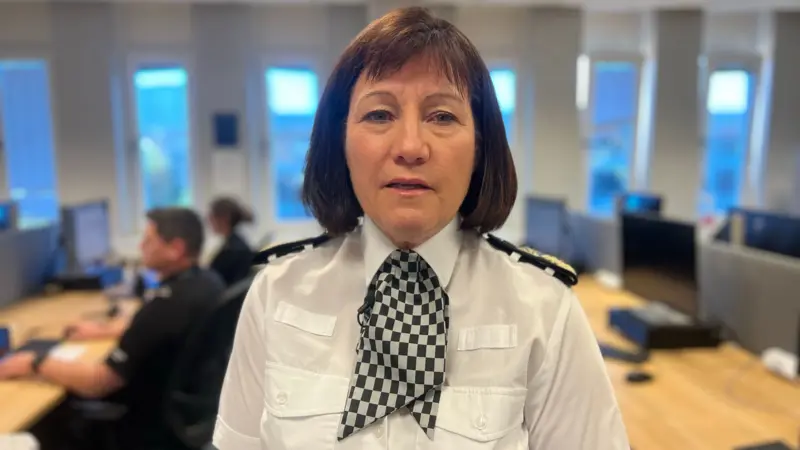
Chief Constable Jo Farrell described violence against women and girls as an “epidemic”, saying the police were not immune to the problem. She made the remarks following the convictions of former officers for serious sexual offences.
“We’ve got in the order of between currently 40 and 50 people currently suspended, so not at work, who are being investigated for offences that relate to violence against women and girls. Those investigations are at various stages,” Farrell told BBC Scotland News.
Police Scotland later confirmed that 45 officers were suspended over the allegations, although not all were currently under criminal investigation.
The development comes amid scrutiny of police vetting procedures following revelations about former officer Alan Greer, who was exposed as a serial rapist after taking his own life in May at the age of 47.
A BBC Disclosure investigation revealed that Greer repeatedly attacked and attempted to murder women over 14 years.
He had passed vetting to join the then Strathclyde Police in 2009 despite having two reports of criminal behaviour against women on his record.
Farrell said an independent review was examining whether failures in the vetting process allowed Greer’s offending to continue.
“It is an ongoing investigation, but it is also subject to an independent review to find out whether there were any opportunities to identify his offending earlier and whether there is any learning from that,” she said.
Greer is one of three former Scottish police officers exposed as rapists this year.
Former officer Cameron Ross, 39, was jailed for 10 years in July after being convicted of raping two women and threatening to kill another. He has appealed against his conviction and sentence.
Last month, former police sergeant Campbell Petrie, 50, was convicted of two counts of rape and other offences, including physical and sexual abuse against two women.
He was suspended after being charged in December 2023 but retired from the force two years later.
Another officer, Jay Skivington, 24, was sentenced in October to 160 hours of unpaid work and given a five-year non-harassment order over violent offences against a woman.
Farrell said about 8,000 Police Scotland personnel, including 6,000 officers and 2,000 civilian staff, were awaiting fresh vetting under stricter regulations introduced earlier this year.
Between 300 and 400 officers had completed the process.
The changes followed the murder of Sarah Everard by Metropolitan Police officer Wayne Couzens in England.
Farrell said the revised rules would allow the force to remove personnel who failed vetting checks.
“It’s only now during this year there has been a change in the vetting regime. So for the first time, if an officer fails their vetting, they can be exited from policing,” she said.
Scottish Police Federation General Secretary David Kennedy called for stronger vetting procedures and more funding, including home visits, detailed reference interviews and psychometric testing.
However, he rejected the suggestion that Police Scotland had a cultural problem with violence against women, describing it as a wider societal issue.
Craig Naylor, His Majesty’s Chief Inspector of Constabulary, said allegations involving officers were taken seriously and that the force had been improving its vetting and conduct procedures.
Scotland’s First Minister John Swinney said he had “full confidence” in Police Scotland and its renewed vetting process, describing the fight against violence against women and girls as a “fundamental priority”.
“It’s absolutely crucial that the public can be assured about the conduct and the approach of police officers, that’s why the vetting that we have put in place by statute to ensure this work is carried out will be carried out so the public can have that assurance,” he said.